In the world of precision machining, choosing between a Vertical Machining Center (VMC) and a CNC Router is a critical decision that can significantly impact the outcome of a project. Both machines have their unique strengths and applications, making it essential to understand their capabilities to make an informed choice.
Understanding CNC Router
A CNC router is a versatile machine used primarily in woodworking, but its applications extend to various materials like plastics, composites, and even soft metals. It operates on a three-axis system, with a spindle that holds cutting tools. This machine’s strength lies in its ability to carve intricate designs and contours with precision, making it a popular choice in industries like furniture production and sign-making.
Delving into the Vertical Machining Center (VMC)
On the other hand, aVertical Machining Center (VMC) is a powerhouse in the metalworking industry. Unlike a CNC router, a VMC is specifically designed for the machining of metal components. It boasts a robust structure and is equipped with advanced features that enable it to handle heavy-duty operations with utmost precision. The spindle of a VMC is oriented vertically, allowing for superior rigidity and stability, especially when dealing with hard materials like steel and aluminum.
The Capabilities of a Vertical Machining Center
The unique capabilities of a VMC open up a realm of possibilities in metalworking. Its vertical spindle orientation enables it to perform operations like drilling, milling, and tapping with unparalleled accuracy. This makes it an indispensable tool in industries such as aerospace and automotive manufacturing, where precision and reliability are paramount. Additionally, a VMC’s ability to handle various tooling options provides versatility in machining various profiles and complex geometries.
Unleashing the Potential of a CNC Router
A CNC router, while not tailored for the heavy-duty demands of metalworking, excels in its domain of expertise. Its proficiency lies in intricate surface detailing, making it the go-to choice for creating ornate designs and artistic engravings. Additionally, its three-axis movement allows for producing 3D sculptures and prototypes with finesse. In industries like woodworking and the production of decorative elements, a CNC router is an indispensable tool.
FAQ
What is a Vertical Machine Center?
A Vertical Machining Center (VMC) is a type of milling machine with a vertically oriented spindle. It is designed for precision machining of solid materials, making it ideal for tasks like drilling, milling, and tapping.
What is the difference between VMC and CNC?
A VMC is a specific type of CNC (Computer Numerical Control) machine. While CNC refers to any machine controlled by a computer, a VMC specifically has a vertically oriented spindle. CNC machines can include various types, such as lathes, routers, and mills.
What is the difference between CNC mill and vertical machining center?
A CNC mill is a broad term that refers to any milling machine controlled by a computer. A Vertical Machining Center (VMC) is a specific type of CNC mill with a vertically oriented spindle. VMCs are designed for precision machining tasks.
What is the difference between vertical and horizontal machining centers?
The primary difference lies in the orientation of the spindle. In a Vertical Machining Center (VMC), the spindle is oriented vertically, while in a Horizontal Machining Center (HMC), it is oriented horizontally. This impacts the types of machining operations each center is best suited for. VMCs excel in tasks requiring precision and fine detailing, while HMCs are ideal for heavy-duty operations and bulk material removal.
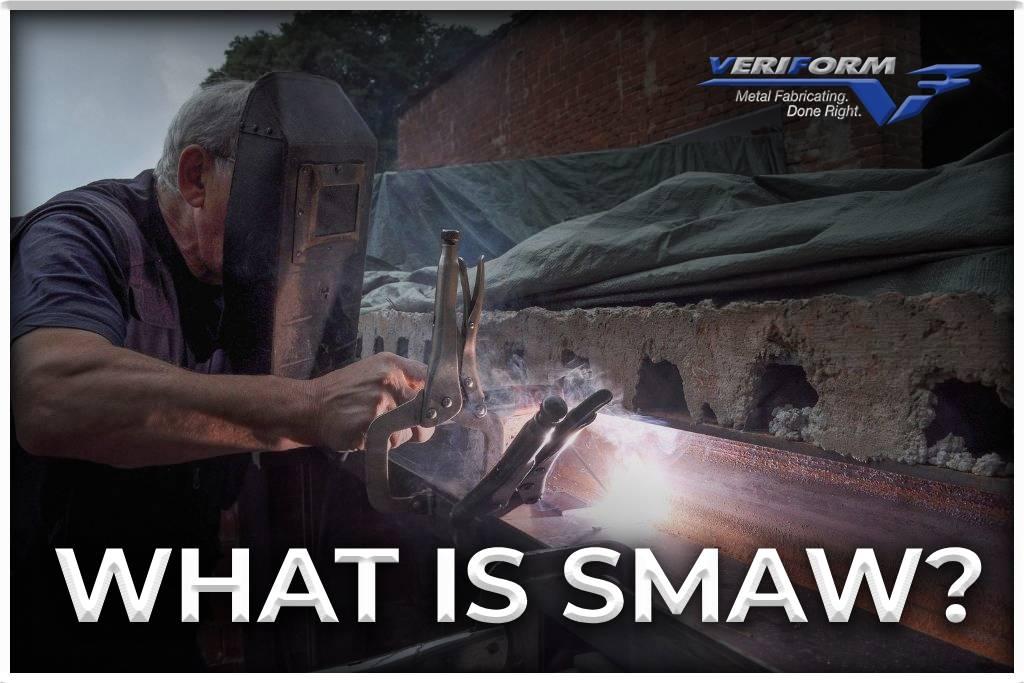
You’ve probably heard the term “SMAW” being thrown around in the world of construction and manufacturing. But what is SMAW? Let me break it down for you in the most engaging and storytelling way possible.
How Does SMAW Work?
Imagine you’re trying to join two pieces of metal. It’s not as simple as just sticking them together with some glue, right? This is where SMAW comes into play. SMAW, or Shielded Metal Arc Welding, is a method used to join two pieces of metal together using an electric current. The current creates an arc between the metal pieces and an electrode, causing them to melt and fuse together.
Picture this: It’s a summer day, and you’re trying to melt two ice cubes together. By placing them close and applying some heat (maybe from the sun), they’ll eventually melt and fuse. SMAW works similarly, but instead of ice, it’s metal, and instead of the sun, it’s an electric arc.
The Components Of A Stick Welder
Let’s dissect a stick welder, the primary tool for SMAW. Think of it as a magical wand that can join metals.
Power Supply: This is the heart of the stick welder. It provides the necessary electric current.
Electrode Holder: Have you ever seen those gripping tools? That’s this. It holds the electrode securely.
Ground Clamp: This ensures that the circuit is complete. It’s typically clamped to the workpiece.
Cables: These are the veins transferring the electric current.
Using a stick welder is akin to using a pen. But instead of ink, you have molten metal. And instead of paper, you have pieces of metal longing to be joined.
The Role Of The Electrode In SMAW Welding
We’ve talked about the stick welder, but what’s the role of the electrode? Imagine the electrode as a candle.
The outer coating, or the “flux,” protects the molten weld from contaminants in the air, like oxygen. As the electrode burns, it also provides filler material that aids in the joining of the metals. So, it’s like a two-in-one package: protection and filler!
Understanding The Welding Arc In SMAW
The arc is the unsung hero of SMAW. It’s the bridge between the electrode and the metals. When you strike an arc, you’re essentially creating a channel of electricity, producing heat upwards of 6,500°F. This heat melts the metal and the electrode, making fusion possible.
Imagine a rainbow, but instead of water droplets and sunlight creating a spectrum of colours, you have an electrode and electric current creating a blinding light and intense heat. That’s the welding arc for you!
In conclusion, when someone asks, “What is SMAW?” you can now regale them with tales of electric arcs, molten metal, and the magic of welding. It’s not just a technical process; it’s an art form and a science. So the next time you see a structure standing tall or a vehicle zooming past, remember the role SMAW might have played in bringing that piece of engineering to life.
Advantages And Disadvantages Of SMAW (Stick) Welding
Welding techniques are a dime a dozen, but SMAW, often referred to as Stick Welding, stands out for specific reasons. Like everything in life, it has its pros and cons. Let’s jump right into what makes it shine and where it might need a little polish.
Benefits Of SMAW
Versatility: One of the significant advantages of SMAW is its versatility. You can weld a variety of metals and alloys, making it a go-to method for many welders.
Portability: Unlike some bulky welding setups, SMAW equipment is relatively compact. This means you can easily transport it to various job sites.
Cost-effective: Initially, the setup cost for SMAW is lower compared to other welding techniques. So, for beginners or those on a budget, it’s a viable option.
Less Sensitivity to Wind and Drafts: While some methods get disrupted by environmental factors, SMAW is robust. This is especially crucial for outdoor welding tasks.
Simple Equipment: The equipment used in SMAW is straightforward and user-friendly. There’s no need for a sophisticated setup or intricate machinery.
Limitations Of SMAW Welding
Skill Dependency: SMAW requires a higher level of skill. Mastery takes time, and there’s a steep learning curve involved.
Slower Welding Speeds: Compared to processes like MIG or TIG welding, SMAW is generally slower. This can affect productivity on larger projects.
Frequent Electrode Changes: The electrodes used in SMAW aren’t very long. This means frequent stops and starts to replace them.
Clean-up: The flux coating on the electrode can create slag, which requires chipping and brushing post-welding. This adds an additional step to the process.
Not Ideal for Thin Materials: Due to the intense heat produced by SMAW, it might not be suitable for thinner materials, which could warp or burn through.
Conclusion
SMAW, or Stick Welding, is an age-old technique with admirers and critics. While it offers the benefits of versatility, cost-effectiveness, and resilience against environmental factors, it also poses challenges in terms of speed, skill requirement, and maintenance. Like any tool or method, its efficiency is often determined by the task at hand and the operator’s skill. Knowing when and where to use SMAW will ensure optimal results every time.
FAQs
What is SMAW in welding?
SMAW stands for Shielded Metal Arc Welding. It’s a manual arc welding process that uses a consumable electrode covered with a flux to lay the weld.
How does SMAW differ from other welding methods?
SMAW primarily uses stick electrodes and is known for its simplicity and versatility. Unlike TIG or MIG welding, SMAW doesn’t require an external gas supply.
What materials can be welded using SMAW?
SMAW is versatile and can be used to weld a range of metals, including carbon steel, stainless steel, cast iron, and certain alloys.
Why is SMAW popular among beginners?
It’s cost-effective, the equipment is straightforward, and the process is more tolerant to surface contaminants compared to other methods.
Are there any downsides to SMAW?
Yes, SMAW can be slower than other methods, requires frequent electrode changes, and the resultant slag needs post-welding cleanup.
Is SMAW suitable for all thicknesses of materials?
Not always. While it’s great for thicker materials, the intense heat can cause issues like warping or burn-through on thinner metals.
Do I need a special environment for SMAW?
No, one advantage of SMAW is its resilience to environmental factors, making it suitable for outdoor welding tasks.
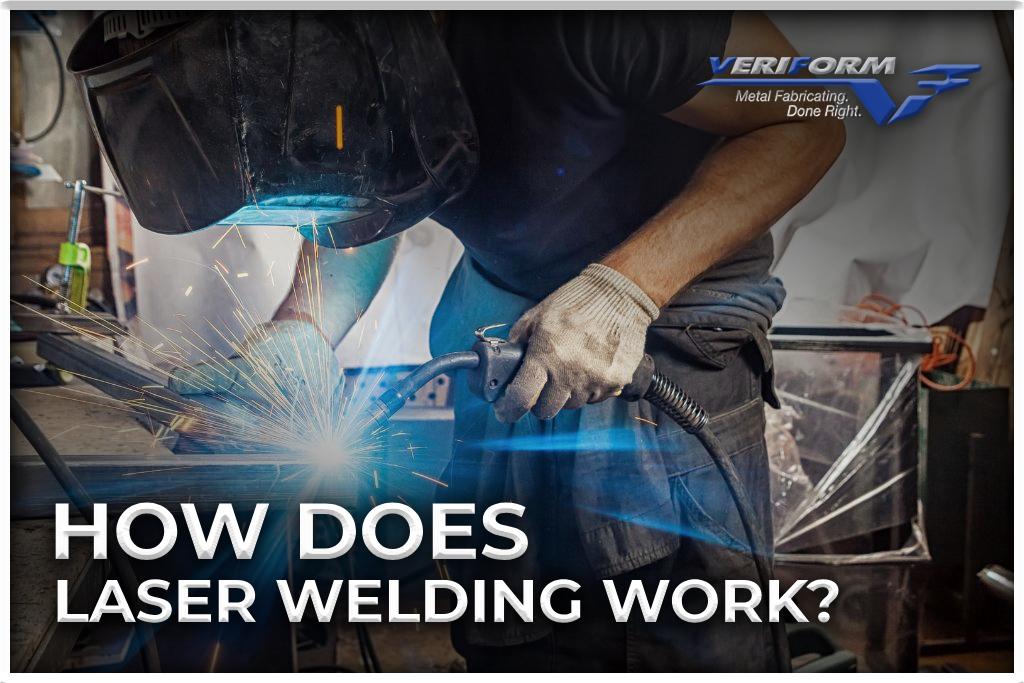
“How does laser welding work?” is the question we’re going to unravel today. Buckle up as we venture into this fascinating world.
Laser welding. Sounds cool, right? This technique leverages the power of lasers, producing a concentrated heat source that allows for narrow, deep welds and high welding rates.
Diving into the History of Laser Welding
Now, let’s hop into our time machine for a moment. The genesis of laser welding dates back to the 1960s – a period marked by a flurry of technological advancements. Laser welding has since evolved into an indispensable tool for various industries, admired for its precision and effectiveness.
Laser Welding: A Rundown of its Pros
But why should we bother with laser welding? Well, the method outshines traditional welding techniques in several ways. Precision, speed, and depth of welding – laser welding shines in these aspects.
The Science Behind Laser Welding
Eager to understand the “how” in “how does laser welding work?” Brace yourself for a dash of science!
Unpacking the Principles of Laser Light Generation
The laser is a central player in laser welding. LASER – or Light Amplification by Stimulated Emission of Radiation – works by stimulating the emission of light through a process of optical amplification. It’s this light that’s harnessed in laser welding.
Lasers Used in Welding
Among the myriad types of lasers, three stand out in welding: Fiber lasers, CO2 lasers, and Nd:YAG lasers. Each brings something unique to the table, adding versatility to laser welding.
Exploring Laser Beam Properties
How does a laser beam pull off such precise welding? The answer lies in its properties – monochromaticity, collimation, directionality, and intensity. These characteristics allow the laser beam to produce deep, high-quality welds.
Equipment Used in Laser Welding
Now, let’s look at the supporting actors in the laser welding process: the equipment.
The Laser Welding Machine Setup
A typical laser welding setup comprises a laser, a beam delivery system, and a workpiece fixture. It’s this trio that joins forces to bring the welding process to life.
Optics and Beam Delivery Systems
These elements have one job: guide the laser beam precisely onto the workpiece. Their role is crucial in ensuring the quality and accuracy of the weld.
Safety Measures of Laser Welding
Of course, safety is paramount in laser welding. Measures such as eye protection, fume extraction, and machine enclosures keep the operator safe while performing the weld.
What are The Laser Welding Techniques?
Finally, let’s explore how laser welding can be performed.
Conduction Welding
Conduction welding uses the laser to heat the surface of the material, resulting in a shallow but wide weld. It’s ideal for thin materials and delicate applications.
Keyhole Welding
Keyhole welding takes a more aggressive approach, drilling a hole into the material and forming a narrow, deep weld. It’s great for applications requiring strong welds.
Penetration Welding
Penetration welding straddles between conduction and keyhole welding. It offers a balance of weld depth and width, making it versatile across various applications.
Materials: The Core of Laser Welding
When discussing “how does laser welding work,” we can’t forget about the materials involved. Lasers aren’t picky, but some substances react better than others.
Metal
From steel to aluminum, copper, and titanium, metals generally fare well under the laser’s heat. Each has unique properties that affect the weld’s strength and appearance.
Plastic
Plastics, too, can be laser welded! Particularly thermoplastics and certain polymers, which respond well to heat and can form robust bonds.
Laser Welding Across Industries
Laser welding’s versatility is a boon to many industries. It’s interesting to see how it’s applied across sectors.
Automotive and Aerospace Industries
Whether it’s fusing parts of a car body or an airplane’s wing, laser welding is a trustworthy ally in these sectors.
Electronics and Medical Devices
For small, intricate components, laser welding is the go-to method. It’s also used in creating medical devices, where precision is paramount.
The Shiny Side: Jewelry
The precision and non-invasive nature of laser welding shine in the jewelry industry, perfect for working with precious metals.
Factors that Influence Laser Welding Quality
Several factors can make or break a laser weld. Understanding these can help optimize the process.
Energy Density and Power Density
These elements determine the penetration depth and weld width. Balancing them is crucial for high-quality results.
Speed, Beam Diameter, and Material
Welding speed and beam diameter also affect the outcome. The material’s thickness and type play a part, too, affecting how the laser interacts with it.
The Pros and Cons of Laser Welding
Finally, no discussion on “how does laser welding work” would be complete without weighing the pros and cons.
Pros of Laser Welding
From high precision and minimal distortion to a non-contact process, laser welding boasts several advantages that set it apart.
Cons of Laser Welding However, it’s not all rosy. Laser welding has its limitations, including high equipment costs and stringent safety requirements.
Final Thoughts on Laser Welding
We’ve journeyed through the question, “how does laser welding work?” Uncovering its mechanics, we’ve seen how it uses lasers, materials, and equipment to join parts together with finesse. Despite some drawbacks, its benefits have made it an essential tool in modern manufacturing. It’s a testament to the blend of science, technology, and creativity in solving real-world problems. Are you looking for laser welding services? Contact VeriForm for more on how we can help you.
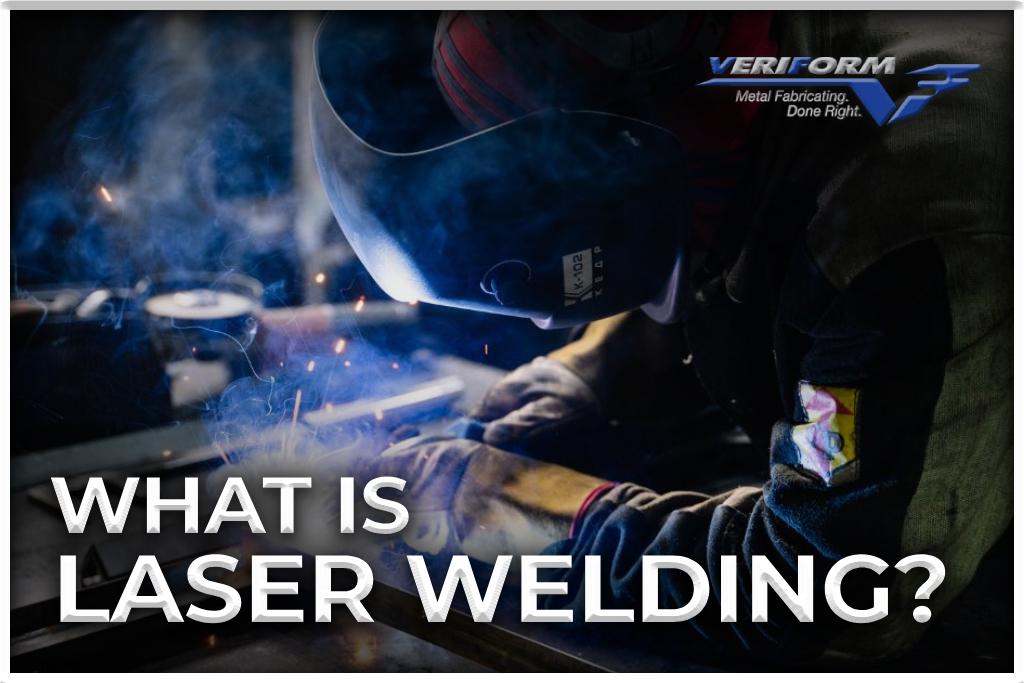
Welcome! Today we’re diving deep into the world of technology, specifically focusing on “What is laser welding?” Now, if you’ve ever thought about the various ways we bond materials together, you’ll likely conjure up images of glue, nails, or maybe even duct tape. But in the realm of high-precision manufacturing, things are a bit more…powerful. Let’s explore the world of laser welding!
What is Laser Welding
When you hear “laser welding,” what comes to mind? Futuristic robotics? Highly specialized engineering labs? In essence, laser welding is a process that uses concentrated light energy to join materials together. The laser beam provides a focused heat source, allowing for narrow, deep welds and high welding rates. It’s all about precision and speed!
Laser Welding: Technique, Types, Advantages, and Applications
Now, diving into the details, we need to look at the technique, types, advantages, and applications of laser welding. As we mentioned earlier, laser welding employs a concentrated beam of light (yes, a laser!) to generate heat and fuse materials together.
The technique is used in a wide range of industries. From automotive to aerospace and even in the medical field, laser welding is everywhere! The advantages are many, including precision, speed, and the ability to work with a variety of materials.
But it’s not all about the benefits. Laser welding also has its unique applications. For instance, think about car manufacturing. To ensure high-quality, safe vehicles, manufacturers need a way to join metal parts together securely, accurately, and quickly. Enter laser welding, the superhero of the manufacturing industry!
How Does Laser Welding Technology Work?
So, how does laser welding work? At its core, the process involves directing a laser beam at the joint where two materials need to be joined. The intense heat from the laser melts the materials, and as they cool, they solidify and fuse together. Imagine two pieces of metal becoming one, all thanks to the power of light.
Two Types of Laser Welding Techniques
When we talk about laser welding, we’re actually talking about two main techniques: heat conduction welding and keyhole welding. Let’s take a closer look at these.
Heat Conduction Welding
Heat conduction welding involves heating the surface of the material until it melts and forms a weld. The laser doesn’t penetrate very deeply, and the result is a shallow but wide weld. This technique is perfect for applications that require a beautiful aesthetic finish, like jewelry.
Keyhole Welding
On the other hand, keyhole welding is all about depth. The laser is so powerful it not only melts the material but it also vaporizes it, creating a small hole or “keyhole”. As the laser moves along the joint, the molten walls of the keyhole collapse and solidify, forming a deep, narrow weld. This technique is used when a strong, deep weld is needed, like in the construction of airplanes.
Advantages of Laser Welding
Let’s talk about the benefits of laser welding. First and foremost, laser welding allows for incredible precision. The ability to direct a high-energy laser beam exactly where it’s needed means that even the smallest, most intricate parts can be welded effectively.
Secondly, the speed at which laser welding operates is second to none. This means increased productivity for businesses and faster turnarounds for clients. It’s a win-win situation!
Moreover, laser welding is versatile. It can be used on a variety of materials, including different types of metals and alloys. It can also be easily automated, making it an integral part of many modern manufacturing processes.
Disadvantages of Laser Welding
However, like everything else in life, laser welding also comes with a set of disadvantages. For one, the initial investment for laser welding equipment can be quite high. This cost may not be justifiable for small-scale operations.
Additionally, laser welding requires a high level of expertise to ensure optimal results. Trained professionals are needed to operate and maintain the machinery. There is also the challenge of safety considerations when working with high-powered lasers, requiring strict adherence to safety protocols.
Laser Welding Applications
Now, onto applications. As mentioned earlier, laser welding is utilized in a wide range of industries. Let’s highlight a few.
In the automotive industry, laser welding is used to create body panels, gear components, and exhaust systems. The aerospace sector uses laser welding to create strong, lightweight components for aircraft and spacecraft.
In the medical field, laser welding is used for the production of medical devices and surgical tools, where precision is key. Even in the realm of electronics, laser welding is used to create connections on circuit boards and to assemble electronic components.
Conclusion
In conclusion, while laser welding comes with its own set of challenges, the benefits it provides in terms of precision, speed, and versatility make it an invaluable tool in today’s manufacturing landscape. From cars to spacecraft and medical devices, the applications are vast and varied, proving that the power of light can indeed be harnessed to create strong, durable, and precise connections. As we move forward, the role of laser welding in the manufacturing process is set to only become more significant. Looking for laser welding services? Contact VeriForm for more on how we can help you.
FAQ’s
What is laser welding used for?
Laser welding is utilized in many industries, including automotive, aerospace, medical, and electronics. It’s employed for its precision, speed, and versatility to create strong, durable connections between various materials, primarily metals and alloys.
Is laser welding as strong as TIG welding?
In terms of strength, laser welding can match and, in some instances, even surpass TIG welding. This is especially true in applications requiring deep, narrow welds or when welding dissimilar or hard-to-weld materials.
Is laser welding as strong as MIG welding?
Yes, laser welding can produce results as strong as MIG welding, if not stronger. This is because laser welding is capable of creating deeper, narrower welds, thus forming more robust connections. However, the strength depends on various factors, including material type and laser settings.
Is laser welding better than welding?
Laser welding is a type of welding, and whether it’s ‘better’ depends on the application. For precision, speed, automation capability, and versatility, laser welding excels. However, traditional welding methods may be preferred for larger, less delicate jobs due to lower equipment costs.
How thick of steel can a laser welder weld?
A laser welder can weld steel of varying thicknesses. For instance, high-power laser welding can handle steel up to 25mm thick. However, the thickness that can be effectively welded also depends on the type of laser, its power, and the welding technique used.
Plasma cutting vs laser cutting costs — ever wondered which one wins the race? In this nifty guide, we’re about to embark on a thrilling, real-world cost comparison journey. Strap in; it’s time to demystify the cutting-edge conundrum!
Plasma Cutting: Beyond the Basics
Plasma cutting isn’t just a fancy term in the manufacturing world—it’s a process used across industries. With a jet of hot plasma, it slices through metal like a hot knife through butter. But what are the associated costs? Let’s delve deeper.
Applications and Benefits of Plasma Cutting
Plasma cutting isn’t reserved for high-tech industries alone. Construction, automotive repairs, and even scrapping services have found it beneficial. It’s highly effective for cutting thick materials, making it a go-to choice for those who require heavy-duty performance.
With the ability to cut through conductive metals with high speed and precision, plasma cutting delivers quick turnarounds. Therefore, when time is money, plasma cutting can prove to be a cost-effective choice.
Examining the Cost Considerations of Plasma Cutting
When looking at “plasma cutting vs laser cutting cost,” the cost of plasma cutting equipment is typically lower. Plus, it allows the cutting of thicker materials, potentially saving you the cost of additional machinery.
However, operating costs can be high. This includes energy consumption, consumable parts, and the maintenance of air filters due to the heavy smoke produced. Therefore, in the long term, plasma cutting could become a costlier choice.
Laser Cutting: A Closer Look
Next up, let’s demystify laser cutting. This process utilizes a high-powered laser to melt and vaporize materials, a feat which is impressive in its own right. But does it stand up to plasma cutting in terms of cost?
Applications and Advantages of Laser Cutting
Laser cutting has applications as varied as the industries it serves. From delicate jewelry design to the robust aerospace industry, laser cutting offers precision like no other.
The advantages? The ability to cut non-metallic materials, cleaner cuts, less waste, and lower power consumption. It’s also worth noting that laser cutting requires fewer consumables, which can help keep costs down.
Analyzing the Cost Factors of Laser Cutting
When it comes to “plasma cutting vs laser cutting cost,” laser cutting equipment comes with a higher initial price tag. However, the long-term operating costs are significantly lower.
Factors such as lower power consumption, reduced waste, and minimal consumable requirements can contribute to overall cost savings. Additionally, the cleaner cuts and precision offered by laser cutting can reduce or eliminate the need for post-cutting processes, further saving on costs.
Cost Factors in Plasma Cutting: A Deep Dive
When considering plasma cutting, several cost factors come into play. Let’s dissect each one to give you a clearer understanding of this complex puzzle.
Material Costs in Plasma Cutting
Different materials require varying levels of energy and time to cut, directly impacting the cost. Conductive metals, for instance, are well suited to plasma cutting. While the ability to cut thick materials can save on machine costs, the increased energy required can inflate overall expenses.
Equipment Costs for Plasma Cutting Machines
When it comes to equipment, plasma cutters tend to be more affordable than their laser counterparts. However, this cost advantage may be offset by higher operating expenses, which brings us to our next point.
Plasma Cutting and Energy Consumption
Energy consumption is a significant factor in the total cost of plasma cutting. Operating a plasma cutter requires a substantial amount of energy, especially when cutting thicker materials, adding to the overall cost.
Maintenance and Consumables in Plasma Cutting
Lastly, plasma cutting requires the replacement of consumables and regular machine maintenance, both of which contribute to the total cost. In addition, the smoke produced by plasma cutting necessitates frequent air filter changes, adding another layer to the expense pile.
Cost Factors in Laser Cutting: An Examination
Laser cutting, on the other hand, has its own set of cost factors. Let’s delve into each one.
Material Costs in Laser Cutting
While laser cutting can handle a variety of materials, the cost fluctuates depending on the type and thickness of the material. Non-metallic materials, for example, are less expensive to cut with a laser, while thicker metals require more energy, thereby increasing costs.
Equipment Costs for Laser Cutting Machines
Laser-cutting machines carry a higher upfront cost than plasma cutters. However, the benefits of precision, speed, and energy efficiency can offset this initial investment over time.
Energy Consumption in Laser Cutting
Despite the high initial cost, laser cutters use less energy than plasma cutters, especially when cutting thinner materials. This energy efficiency can lead to substantial cost savings in the long run.
Maintenance and Consumables in Laser Cutting
In terms of maintenance, laser cutting machines require less frequent upkeep than plasma cutters. Fewer consumables are needed as well, which further reduces ongoing costs.
Cost Comparison: Plasma Cutting vs Laser Cutting
In the “plasma cutting vs laser cutting cost” debate, a direct comparison of costs can help paint a clearer picture.
Direct Cost Analysis
While plasma-cutting equipment costs less upfront, higher operating costs and maintenance can outweigh this advantage. Laser cutting, though more expensive initially, offers lower ongoing costs, potentially leading to savings over time.
Efficiency and Productivity
In terms of speed, plasma cutting is generally faster for thicker materials, potentially increasing productivity and reducing labour costs. However, the superior precision of laser cutting can eliminate the need for secondary processes, further saving time and money.
Precision and Quality
The quality of a cut directly influences the overall project cost. While plasma cutting is effective for thick materials, the precision of laser cutting can reduce waste and save on material costs.
Scalability and Versatility
When it comes to scalability and versatility, the nature of your projects will determine which method is more cost-effective. For diverse materials and thicknesses, the versatility of laser cutting might make it the more cost-effective choice. Conversely, for projects primarily involving thick, conductive materials, plasma cutting might be the more economical option.
Case Studies: Real-World Cost Comparisons
Case studies provide valuable insights into real-world applications. Let’s examine the cost implications of plasma cutting vs laser cutting in three distinct scenarios.
Case Study 1: Industrial Applications
In heavy-duty industrial applications, plasma cutting proves cost-effective due to its ability to handle thick materials efficiently. Despite higher operating and maintenance costs, the speedy and robust performance of plasma cutting machines provides value for money in high-volume, thick-material industrial operations.
Case Study 2: Artistic Projects
For artists working with mixed media, the precision and versatility of laser cutting are often worth the initial investment. The capability to handle non-metallic materials, produce intricate designs, and reduce material waste leads to cost savings in the long run, making laser cutting a preferred choice.
Case Study 3: Automotive Manufacturing
In the automotive industry, a balance of speed, precision, and cost is essential. While plasma cutting offers speed, the precision and versatility of laser cutting, along with lower operating costs, make it a cost-effective solution for this industry.
Summary: Making an Informed Choice
Deciding between plasma cutting and laser cutting involves considering various cost factors, including material, equipment, energy consumption, and maintenance costs. Your specific project requirements and budget will play significant roles in this decision.
Conclusion: The Final Cut
Choosing between plasma cutting and laser cutting ultimately comes down to analyzing costs and assessing project-specific needs. By understanding the cost factors associated with each method, you can make an informed decision that balances quality, efficiency, and budget constraints. Always remember: the cheapest option isn’t always the most cost-effective in the long run. So, choose wisely.
Frequently Asked Questions (FAQs)
Let’s address some common queries about “plasma cutting vs laser cutting cost” to provide a more comprehensive understanding.
Primary cost factors in choosing between plasma and laser cutting include equipment costs, material costs, energy consumption, and maintenance costs.
For small-scale projects with limited budgets, the choice often depends on the specific project requirements. Laser cutting is often preferred for its precision, especially for intricate designs.
Long-term cost savings can be realized with laser cutting due to its energy efficiency, reduced waste, and lower maintenance requirements.
Material choice significantly impacts overall costs. Thicker, conductive materials are costlier to cut with lasers, while non-metallic materials are more expensive to cut with plasma.
The initial investment in cutting equipment can often be justified by long-term cost benefits, particularly with laser cutting machines.
Maintenance costs and requirements are generally higher for plasma-cutting machines due to the need for regular consumable replacements and air filter changes.
Industries where precision and versatility are critical often find laser cutting more cost-effective. In contrast, industries that primarily cut thick conductive materials may find plasma cutting more economical.
Consumable costs are typically higher for plasma cutting due to frequent replacements needed for electrodes and nozzles.
The choice of cutting method can indeed affect the overall project timeline. Plasma cutting is typically faster for thick materials, while laser cutting offers speed and precision for thinner materials.
Hidden costs to consider include training costs for operators, potential downtime for maintenance, and the cost of secondary processes, if required.
Plasma cutting vs laser cutting: a dilemma you’re familiar with? Dive into our guide that untangles the advantages and limitations of each method. Brace yourself for an insightful journey that makes your decision-making a breeze!
Plasma Cutting: Unfolding the Story
Taking a trip back in time, plasma cutting was born in the post-WWII era, during the 1950s. Developed as an efficient method for cutting metals, it answered the need for a high-speed, high-temperature process that could seamlessly cut through electrically conductive materials.
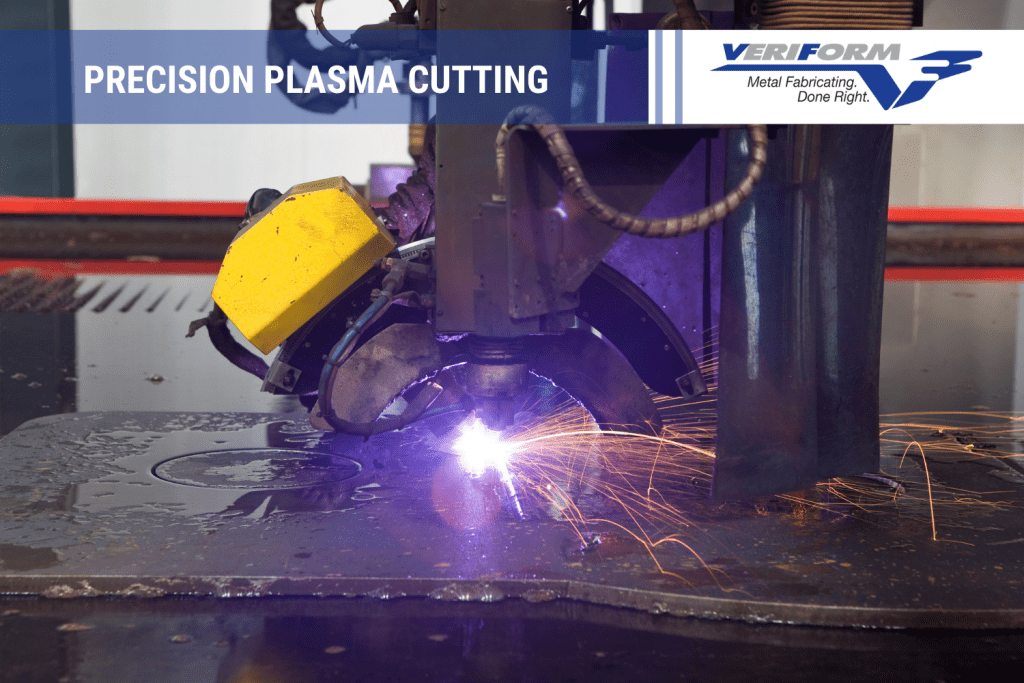
But how does plasma cutting work? Plasma is a super-heated, electrically ionized gas. When focused through a narrow nozzle, this becomes a cutting torch capable of slicing through metal like a hot knife through butter.
To paint a clearer picture, a plasma cutting machine comprises three main parts: the power supply, the arc starting circuit, and the torch. These elements work in harmony, creating the ideal environment for plasma formation and ensuring the precision and efficiency of the cut.
Plasma cutting, like a superhero, boasts several strengths. It can cut through any electrically conductive material, regardless of thickness. It is also versatile and fast, lending itself perfectly to automation. Furthermore, it comes with the added benefit of a cheaper price tag compared to some alternatives, like laser cutting.
On the other hand, every superhero has a weakness, and plasma cutting is no exception. Precision is its Achilles’ heel, as it doesn’t have the tight tolerances of laser cutting. Moreover, it creates a wider heat-affected zone (HAZ), which may cause material warping.
Despite these limitations, plasma cutting is favoured in many industries. For example, it’s extensively used in the automotive industry for cutting car parts, in construction for creating structural steel components, and in salvage operations for scrapping metals.
Laser Cutting: The Art and the Science
Turning our focus now to laser cutting, we find ourselves in the late 1960s, a time when the theoretical framework for lasers, proposed by Einstein years earlier, began to shine in practical applications.
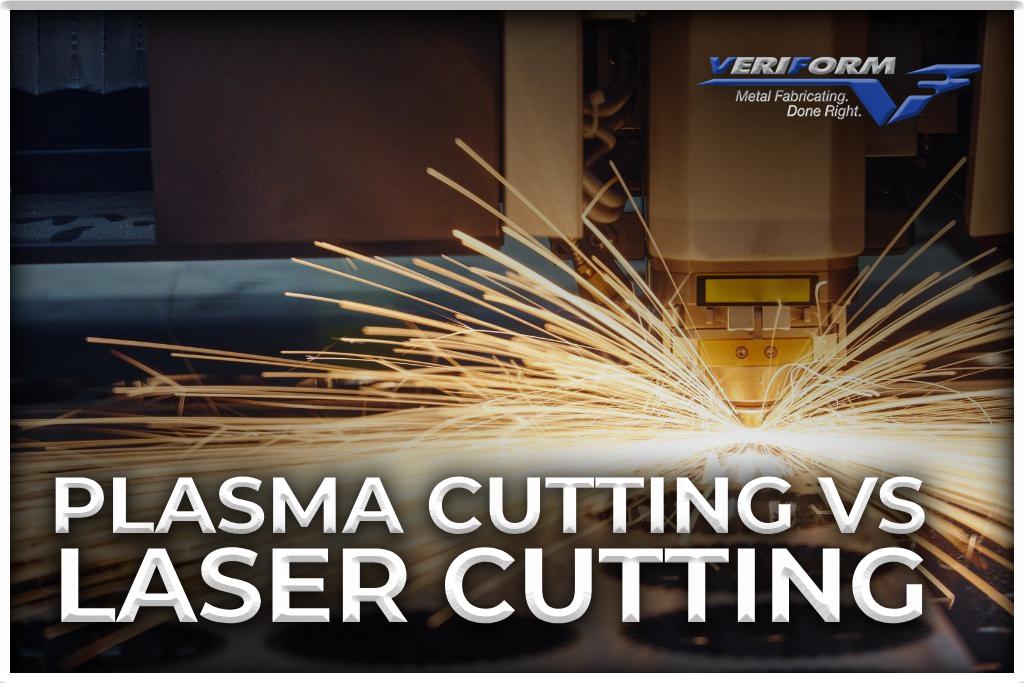
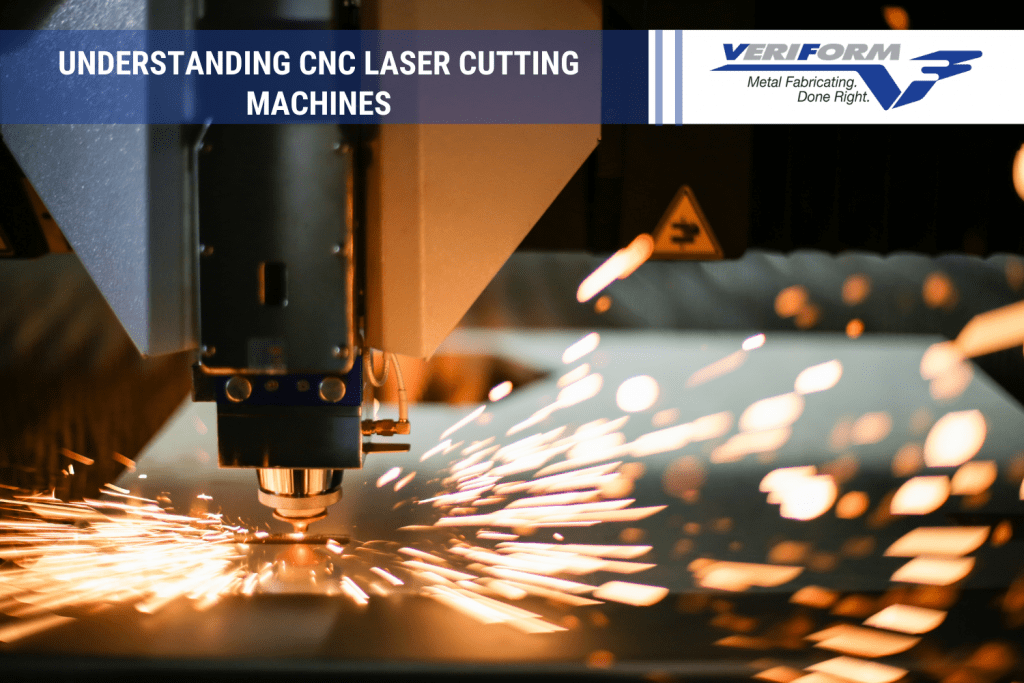
Laser cutting, in essence, involves the use of a high-powered laser beam controlled by a computer to cut materials. So, how does it work? It’s simple yet brilliant. The laser beam melts, burns, or vaporizes the material while a jet of gas blows away the residue, leaving a clean, precise cut.
Looking into a laser cutting machine, we find the resonator, where the laser beam is generated, and a series of mirrors to direct the beam to the cutting head. Here, a focus lens intensifies the beam onto the material to be cut.
Laser cutting brings its own set of advantages to the table. It’s highly accurate and able to produce intricate cuts with tight tolerances. It also leaves a smooth, clean edge and has a smaller HAZ compared to plasma cutting.
Yet, laser cutting isn’t without its drawbacks. It is less effective on thicker materials and may require a more substantial investment in terms of cost and maintenance.
Laser cutting has carved its niche in industries where precision and quality are paramount. It’s extensively used in the aerospace industry, electronics for circuit boards, the medical field for surgical instruments, and the jewelry industry for intricate designs.
In our journey today through the captivating world of plasma cutting and laser cutting, we’ve gained insight into two technologies that, while different, share a common purpose: to cut and shape our world. And in that, they are not rivals but partners, each filling a unique role in the vast universe of cutting technology.
Direct Comparison: Plasma Cutting vs. Laser Cutting
As we delve into the nitty-gritty comparison between plasma cutting and laser cutting, we’re confronted with a few pivotal questions. Let’s answer them one by one.
When it comes to speed and efficiency, plasma cutting usually takes the cake. It cuts thicker materials faster than its laser counterpart. Yet, if accuracy is what you’re after, laser cutting stands out. It provides a finer cut, especially for thin materials, and is the master of intricate designs.
Material compatibility is another aspect to consider. Plasma cutting is the jack of all trades, handling any electrically conductive material, while laser cutting shines with non-reflective materials, be it metal, wood, or plastic.
When we talk about cost-effectiveness, plasma cutting typically offers a better value for money. It has a lower initial investment and operational cost. However, remember that cheaper isn’t always better, and the decision should be based on your specific needs.
Regarding safety, both have their risks. Laser cutting may pose a risk of burns and eye injury, while plasma cutting can expose the operator to ultraviolet and infrared radiation. It’s crucial to follow safety procedures and wear appropriate protective gear when operating either.
Finally, let’s touch on maintenance. Generally, laser cutting machines require more regular maintenance and cleaning than plasma cutters, which may contribute to a higher ongoing cost.
Choosing the Right Technology: Factors to Consider
Deciding between plasma cutting and laser cutting is not a simple “this or that” choice. It’s a decision driven by multiple factors.
Evaluate your project needs first. Do you prioritize speed and thickness capacity or precision and finesse? Understanding what you require is the first step in making the right choice.
Next, consider your budget. How much are you willing to invest, not just initially, but also in ongoing costs and maintenance?
Understanding the material you’ll be cutting is crucial too. Some materials are better suited for plasma cutting, while others yield better results with laser cutting.
The scale of your operation also plays a part. Larger-scale operations may benefit from the speed and cost-effectiveness of plasma cutting, while smaller, precision-focused tasks may lean towards laser cutting.
Emerging Trends and Future Predictions
Peering into the future, we can already see innovations pushing the boundaries of both plasma and laser-cutting technologies.
In the plasma-cutting realm, we’re seeing machines with improved energy efficiency and even greater cut quality. Enhanced automation and IoT integration are other significant advancements.
Concurrently, laser cutting is also evolving. Fibre lasers are gaining popularity due to their efficiency, while high-powered lasers promise to enhance the cutting of thicker materials.
Looking ahead, we can expect to see a continuation of these trends. We anticipate more energy-efficient, faster, and more precise cutting machines. AI integration might play a significant role in the coming years, paving the way for a new era in cutting technology.
Conclusion
Having journeyed through the intriguing world of plasma cutting and laser cutting, we now stand at a juncture where we reflect on what we’ve learned.
We explored the histories, principles, strengths, and limitations of both technologies. We discovered that plasma cutting excels in terms of speed, cost-effectiveness, and material versatility, while laser cutting is the champion of precision and finesse.
Yet, the plasma cutting vs. laser cutting debate isn’t a battle with a clear winner. Each technology has its place, and each serves a unique purpose, and the choice between the two should be driven by your specific needs, budget, material, and scale of operation. As we look to the future, the exciting advancements in both technologies promise to continue shaping our world in remarkable ways.
Frequently Asked Questions (FAQs)
Can the same machine perform both plasma and laser cutting? No, plasma cutting and laser cutting require different machines. Each machine is specifically designed to utilize its respective technology.
How does the thickness of the material influence the choice between plasma and laser cutting? Thicker materials are generally better suited for plasma cutting due to their speed and efficiency. However, for thinner materials where precision is key, laser cutting tends to be the preferred method.
Which technology is more environmentally friendly: plasma cutting or laser cutting? Both methods have environmental considerations. Plasma cutting can produce noise and fumes, while laser cutting, particularly CO2 lasers, can consume more power. Overall, the environmental impact may depend more on the specific machine and how it’s used than the technology itself.
What kind of training is needed to operate these machines? Both machines require training to operate safely and efficiently. Operators need to understand the principles of the technology, machine operation, safety procedures, and basic maintenance.
How to maintain and troubleshoot common issues in plasma and laser cutting machines? Maintenance and troubleshooting require a basic understanding of the machine’s components and operation. Regular cleaning, inspecting and replacing worn-out parts, and preventive maintenance are important. For troubleshooting, consulting the machine’s manual or manufacturer’s guide can provide the necessary information.
Diving into the “horizontal vs vertical milling machine” debate? Well, you’re in the right place. This guide slices through the jargon to serve you the straight facts on their roles in precision engineering. Let’s dig in!
A Brief Foray into the World of Milling Machines
At its core, a milling machine is a workhorse that meticulously shapes and machines materials. From car parts to aerospace components, the role of milling machines is far-reaching. Each machine comes outfitted with a spindle, a worktable, and cutting tools – each playing a crucial part in its operation. The spindle holds the cutter, the worktable supports the workpiece, and the cutting tools do exactly what their name suggests: cut! But how do they perform the magic of machining? Let’s explore that next.
The Mysteries of Milling: A Deep Dive
In essence, milling machines operate by moving the workpiece against a rotating cutter. As the cutter spins, it removes material from the workpiece, creating the desired shape. This basic process can be tweaked and tailored depending on the specific milling machine and the requirements of the task at hand. But enough with the generalities. It’s time to introduce the stars of our show: the horizontal and vertical milling machines.
The Horizontal Milling Machine: A Titan of Efficiency
So, what exactly is a horizontal milling machine? Well, as the name suggests, its orientation is horizontal, with the spindle positioned parallel to its worktable. This orientation allows the machine to perform heavy-duty tasks with superb efficiency.
However, like everything in life, the horizontal milling machine has its pros and cons. On the positive side, its design allows for simultaneous multiple-cutting, which translates into speed and efficiency. On the downside, its setup can be a bit complicated, and it may not be suitable for certain intricate tasks.
Delving into its components, a horizontal milling machine comes equipped with a robust arbour that supports multiple cutters. This capability makes it ideal for tasks such as grooving and slot cutting.
You might be wondering, “Where exactly would this machine shine?” Well, the automotive and aerospace industries frequently use horizontal milling machines due to their ability to efficiently handle large and heavy workpieces.
Vertical Milling Machines: Your Versatile Workhorse
Switching gears, let’s now focus on the vertical milling machine. Named for its vertical spindle orientation, this machine stands as the counterpart to its horizontal cousin. But what sets it apart? Why would one opt for a vertical milling machine?
Vertical milling machines, just like their horizontal counterparts, have their strengths and weaknesses. Their compact design and versatility are their key selling points. Whether it’s drilling, plunge cuts, or complex contouring, the vertical milling machine is up to the task. However, their downsides lie in handling large or heavy workpieces. Due to their design, they tend to be less efficient for such tasks.
Peering into its structure, the vertical milling machine stands tall, with a spindle aligned perpendicular to the worktable. Its design allows for a more human-centric operation with a clear line of sight and easy accessibility.
These features make vertical milling machines a popular choice in industries requiring intricate detail work. They’re seen in action in small parts production, die sinking, and even in the artisanal sector, where detail and precision reign supreme.
As an example, consider “Craftsmen Y.” This small-scale artisanal shop uses a vertical milling machine to create intricate jewelry designs. The machine’s precision and versatility have enabled them to experiment with designs that would otherwise be unachievable. The result? A booming business and satisfied clientele.
Comparing Horizontal and Vertical Milling Machines: A Tale of Two Giants
The crux of our journey brings us to the comparison of these two machining marvels. Both machines serve the same core purpose—milling—yet their approaches differ.
Let’s start with the most obvious difference: spindle orientation. A horizontal machine houses a horizontally aligned spindle, while a vertical one (you guessed it!) aligns its spindle vertically. This fundamental difference impacts the kind of work each machine can handle, with horizontal machines excelling in heavy-duty tasks and vertical ones thriving in detailed, intricate work.
The accessibility of the workpiece also differs. The horizontal machine’s design can make certain areas of a workpiece harder to reach, while the vertical design allows for more direct access.
So, how do you decide between the two? It all boils down to the nature of your work. Are speed and efficiency your game, or does intricate detail work spark your interest?
Take the case of “Fabricators Z.” This company operates in both the aerospace and artisanal sectors. For the production of large aerospace parts, they rely on their horizontal milling machines. But when it comes to crafting intricate artisanal pieces, the vertical milling machine takes center stage.
Conclusion: Bringing It All Together
Indeed, it’s quite the journey we’ve taken, unravelling the marvels of horizontal and vertical milling machines. As we’ve seen, the choice between these machines will largely depend on your specific needs and the nature of the work you’re tackling.
However, this exploration doesn’t have to end here. The world of milling machines is vast and fascinating, beckoning professionals, enthusiasts, and curious minds alike. So go on, delve deeper, and discover the incredible potential of these engineering wonders.
And remember, if you’re in need of top-tier metal fabrication services, look no further than VeriForms. Their expertise and commitment to quality are second to none, offering you the very best in precision and performance.
Frequently Asked Questions
What is the difference between a vertical milling machine and a horizontal milling machine?
A vertical milling machine’s spindle is aligned vertically, making it ideal for detailed work. On the other hand, a horizontal milling machine has a horizontally oriented spindle, making it better suited for heavy-duty tasks.
Why use a horizontal milling machine?
Horizontal milling machines excel in speed and efficiency thanks to their ability to perform multiple cuts simultaneously. They’re particularly effective when working with large, heavy workpieces.
What are the disadvantages of a horizontal milling machine?
Despite their effectiveness, horizontal milling machines can be quite complex to set up. Additionally, they might not be the best choice for tasks requiring intricate detailing.
What is the major difference between a vertical boring mill and a horizontal mill?
The main difference lies in the spindle’s orientation and the type of work they’re best suited for. Vertical mills are excellent for drilling deep holes, while horizontal mills are ideal for heavy material removal and surface preparation.
What is the advantage of a vertical mill?
Vertical milling machines shine in their versatility and compact design. They’re well-suited for precision tasks, intricate work, and where space is at a premium.
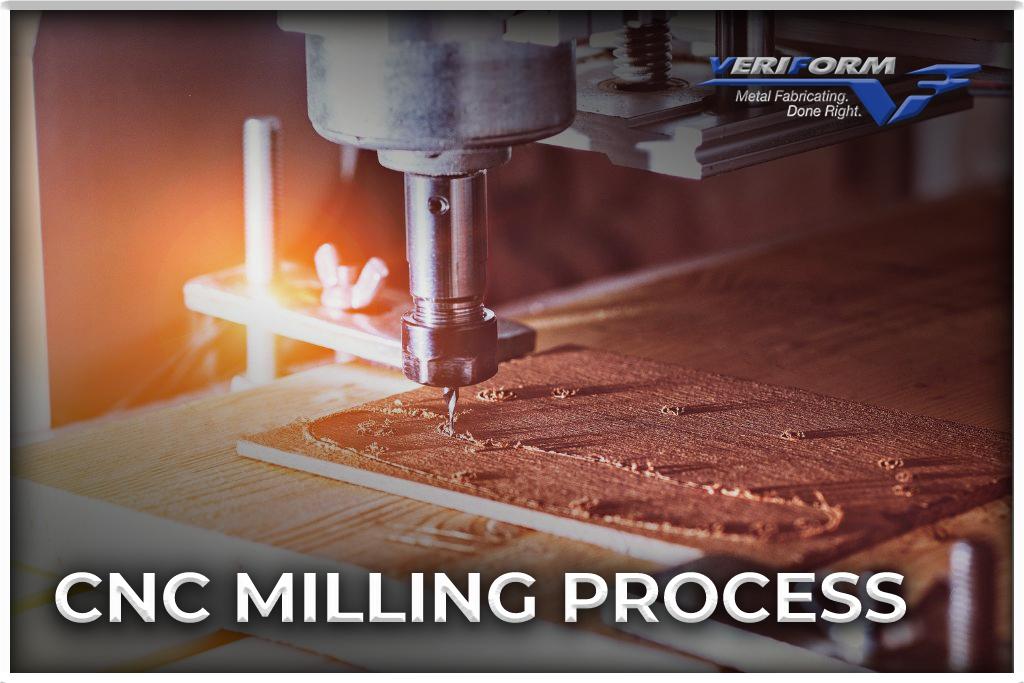
Lain milling, also known as CNC milling, is a machining process that employs computer numerical control (CNC) to create intricate shapes and parts from a block of material. This process utilizes computerized controls and rotating multi-point cutting tools to progressively remove material from a workpiece, achieving high precision and complexity in a variety of industries.
The milling process starts with a digital design created using Computer-Aided Design (CAD) software. This design is then converted into a series of G-code instructions that the CNC milling machine reads and executes. The machine’s cutting tools follow the G-code instructions to remove material from the workpiece along three or more axes, creating the desired shape.
Components of a Lain Milling Machine
Cutting Tools
Different types of milling machining require various cutting tools, depending on the desired shape and material. Some common types include face milling, angular milling, and form milling tools. These tools have distinct geometries to suit specific milling operations and materials.
Workpiece
The workpiece is the block of material being machined in the milling process. It is typically clamped to the machine’s worktable or held in a fixture. Workpieces can be made from various materials such as metals, plastics, and composites.
CNC Control System
The CNC control system consists of hardware and software that interpret and execute G-code instructions. It controls the machine’s movement along the axes and manages various functions such as spindle speed, tool changes, and coolant application.
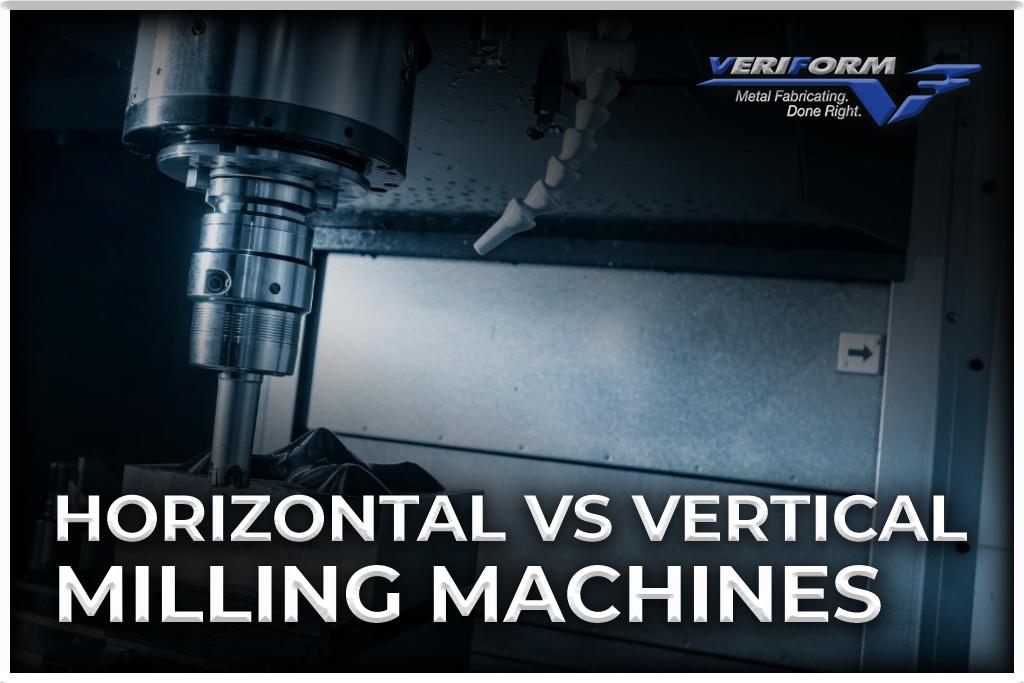
Vertical milling machines have a vertically oriented spindle, allowing the cutting tools to approach the workpiece from above. These machines are suitable for a wide range of CNC milling operations and are typically more compact than horizontal milling machines.
Horizontal Milling Machines
Horizontal milling machines have a horizontally oriented spindle, allowing the cutting tools to approach the workpiece from the side. These machines are well-suited for heavy-duty milling operations and can use additional attachments for more versatility, such as gang milling.
5-Axis CNC Milling Machines
5-axis CNC milling machines offer greater flexibility by allowing the cutting tools to move along five axes. This enables the machining of complex shapes and parts with fewer setups, reducing production time and increasing accuracy.
Drilling is the process of creating holes in a workpiece using a rotating cutting tool called a drill bit. CNC milling machines can perform drilling operations with high precision and repeatability.
Boring
Boring is the process of enlarging an existing hole in a workpiece using a single-point cutting tool called a boring bar. CNC milling machines can perform boring operations to achieve tight tolerances and accurate hole diameters.
Tapping
Tapping is the process of cutting internal threads into a hole using a specialized cutting tool called a tap. CNC milling machines can perform tapping operations with precise control, ensuring that the threads are accurately formed.
Contouring
Contouring is the process of machining the outer surface of a workpiece to create a specific shape or profile. CNC milling machines can perform contouring operations by moving the cutting tool along a predefined path, resulting in smooth and
Lain milling, or CNC milling, is an essential manufacturing process that offers numerous benefits, such as high precision, increased production speed, and reduced human error. Its applications span various industries, making it a versatile and valuable process. By understanding the different types of CNC milling machines, components, and operations, manufacturers can make informed decisions and optimize their production processes.
Q1: What materials can be machined using Lain milling?
A1: Lain milling can machine various materials, including metals (aluminum, steel, brass, copper), plastics (ABS, POM, nylon), and composites. However, the machinability depends on the material’s properties and the cutting tools used.
Q2: Can Lain milling machines create complex shapes and parts?
A2: Yes, Lain milling machines can create complex shapes and parts by moving the cutting tools along multiple axes. 5-axis CNC milling machines offer even greater flexibility and can machine intricate geometries with fewer setups.
Q3: How do I choose the right cutting tools for my Lain milling operation?
A3: The choice of cutting tools depends on the material being machined, the desired shape, and the specific milling operation. Consulting with cutting tool manufacturers or experienced CNC machinists can help you select the right tools for your application.
Q4: What is the difference between Lain milling and CNC turning?
A4: Lain milling is a machining process that uses rotating cutting tools to remove material from a workpiece, while CNC turning is a process that rotates the workpiece and uses a stationary cutting tool to remove material. Both processes are controlled by computer numerical controls and are used to create precision parts.
Q5: What factors affect the quality of Lain milling operations?
A5: Factors that affect the quality of Lain milling operations include machine rigidity, cutting tool selection, workpiece material, cutting parameters (feed rate, spindle speed, depth of cut), and coolant application.
Metal manufacturing is an essential industry that creates a vast array of custom metal fabricated products, from automotive components to construction materials. This comprehensive guide will explore various types of metal fabrication, including the use of press brakes, stainless steel, and other manufacturing processes to transform raw materials into functional and aesthetic products.
Understanding Metal Fabrication
At its core, the metal fabrication process involves a series of techniques to shape metal into the desired form. Some common types of metal fabrication include cutting, bending, and welding, which work together to create a custom piece of metal. The choice of methods and the sequence in which they are applied depends on the fabricated product’s design, material, and end-use.
Types of Metal Fabrication
There are several types of metal fabrication processes, each suited to different materials and applications. Some common processes include:
Sheet Metal Fabrication: Involves shaping metal sheets into various forms using cutting, bending, and joining techniques. Sheet metal fabrication is widely used in the automotive, aerospace, and construction industries.
Machining: A subtractive process that removes material from a workpiece using tools such as lathes, mills, and drills. Machining is commonly used to create precision components and intricate details.
Welding: The process of joining metal pieces together by melting and fusing them at the joint. There are various types of welding, such as TIG, MIG, and arc welding, each with its advantages and applications.
Cutting: Cutting processes, including plasma cutting and laser cutting, are employed to shape the metal. Plasma cutting uses a high-velocity jet of ionized gas, while laser cutting employs a focused beam of light to cut through the metal.
Metal Fabrication Workflow: A Detailed Look
The metal fabrication workflow is a complex and multi-step process, ensuring that the final product meets the desired specifications and performance standards. This comprehensive overview breaks down each stage of the metal fabrication workflow to provide a better understanding of the entire process.
1. Design and Engineering:
The first step in the metal fabrication process is the creation of detailed plans, blueprints, or computer-aided designs (CAD) based on the client’s requirements. These designs dictate the materials, dimensions, and manufacturing processes necessary to create the final product. Engineers may use various software tools to optimize and analyze the design’s structural integrity and performance.
2. Material Sourcing:
he appropriate materials are sourced once the design is finalized. Factors such as strength, durability, weight, and corrosion resistance must be considered when selecting the ideal material for the project. Common materials used in fabrication include stainless steel, aluminum, and carbon steel.
3. Material Preparation:
Before the fabrication process begins, materials must be prepared to ensure they meet the required specifications. This stage involves processes including cutting large-scale metal sheets to size, cleaning surfaces to remove dirt, grease, or contaminants, and applying protective coatings if necessary.
4. Fabrication Techniques:
The main fabrication stage involves various techniques such as cutting, bending, and welding to shape the metal into the desired form. Cutting methods like plasma and laser cutting are used to create intricate shapes and patterns. Press brakes are utilized to bend metal sheets accurately, while different types of welding, such as TIG and MIG, are employed to join metal pieces securely.
5. Assembly:
In some cases, the fabrication process involves assembling multiple components to create a more complex product. This step requires careful alignment and joining of parts to ensure proper fit and functionality. Bolting, riveting, and adhesive bonding are some of the techniques used for assembly.
6. Quality Control and Inspection:
Quality control measures are implemented throughout fabrication to ensure the final product meets the required specifications and industry standards. This involves conducting visual inspections, dimensional checks, and non-destructive testing methods like radiography and ultrasonic testing to detect defects or imperfections in the final product without causing damage.
7. Finishing and Post-Processing:
After the fabrication process is complete, the product may undergo various finishing and post-processing techniques to improve its appearance, performance, or longevity. These processes can include painting, powder coating, anodizing, galvanizing, or polishing. The choice of finishing technique depends on the desired look and protective qualities of the final product. Some materials may also require heat treatment to improve their mechanical properties or stress relief.
8. Packaging and Delivery:
Once the final product has been fabricated, inspected, and finished, it is carefully packaged for transportation and delivery to the client or end user. Proper packaging is essential to protect the product from damage during transit and ensure that it arrives in pristine condition. The delivery process can involve local or international shipping, depending on the project’s scope and requirements.
Learn More About The Basics of Metal Fabrication
By understanding the detailed workflow involved in metal fabrication, from design and engineering to finishing and delivery, you can better appreciate the skill, precision, and expertise required to create high-quality metal products. Each stage plays a vital role in ensuring that the final product meets the desired specifications and performs optimally in its intended application. To learn more about the basics of metal fabrication, check out this article on metal fabrication basics.
Choosing the Right Fabrication Process
Selecting the appropriate fabrication process for your project is essential to ensure its success. Factors to consider include the material type, design complexity, production volume, budget, desired finish and appearance, and the expertise and equipment available. Evaluating these factors will help you make the right choice for your metal fabrication project.
Tools and Equipment Used in Fabrication Shops
Fabrication shops employ various tools and equipment to execute different processes, such as press brakes for bending, plasma cutters for cutting, and welding machines for joining metal pieces. In addition, several hand tools, such as deburring tools, are also used during the fabrication process to clean and finish metal components. To learn more about the tools used in metal fabrication, you can read this article on metal fabrication tools used by fabricators.
Safety Practices in Metal Fabrication
Safety is paramount in any fabrication environment. Fabrication shops must adhere to strict safety practices, such as wearing proper protective equipment, maintaining a clean and organized workspace, and ensuring that employees receive adequate training on the safe use of tools and equipment. For more information on safety practices in metal fabrication, check out this article on common metal fabrication safety practices.
Custom Metal Fabrication Advantages and Disadvantages
Custom metal fabricated products offer several advantages, such as the ability to create unique designs tailored to specific requirements and the flexibility to adjust the fabrication process as needed. However, custom metal fabrication can also have some drawbacks, such as increased costs and longer lead times compared to mass-produced items. To learn more about the pros and cons of custom metal fabrication, read this article on the advantages and disadvantages of custom metal fabrication.
Materials Used in Metal Fabrication
Various materials can be used in metal fabrication, depending on the desired properties and applications of the final product. Some common materials include:
Stainless Steel: Known for its corrosion resistance, strength, and durability, stainless steel is widely used in a range of applications, including food processing, medical devices, and automotive parts. For more information on stainless steel fabrication services, visit this stainless steel fabrication services landing page.
Aluminum: Lightweight and highly versatile, aluminum is commonly used in the aerospace, automotive, and consumer goods industries. Its excellent corrosion resistance and good strength-to-weight ratio make it an attractive choice for many applications. For more information on aluminum metal fabrication services, visit this aluminum metal fabrication services landing page.
Carbon Steel: Carbon steel offers excellent strength and durability at a lower cost than other materials, making it a popular choice for structural applications, automotive components, and industrial equipment. For more information on carbon steel metal fabrication services, visit this carbon steel metal fabrication services landing page.
Conclusion
Metal fabrication is a complex process that involves various techniques and materials to create custom metal products. By understanding the different types of metal fabrication, the tools and equipment used in fabrication shops, and the materials suitable for different applications, you can make informed decisions for your next metal fabrication project.
Frequently Asked Questions
Q1: What is the difference between plasma cutting and laser cutting?
Plasma cutting uses a high-velocity jet of ionized gas to cut through metal, while laser cutting employs a focused beam of light. Both methods are used for cutting metal, but they have different advantages and applications depending on factors like material type, thickness, and required precision.
Q2: What are the most common types of welding techniques?
Some common types of welding techniques include TIG (tungsten inert gas) welding, MIG (metal inert gas) welding, and arc welding. Each welding method has its advantages and is suitable for different materials and applications.
Q3: Can any type of metal be used in the fabrication process?
While many metals can be used in the fabrication process, some materials are more suitable for specific applications due to their properties, such as strength, corrosion resistance, and ductility. It’s essential to choose the right material based on your project’s requirements.
Q4: How can I ensure the quality of my fabricated metal products?
Quality control measures, such as inspections and non-destructive testing methods, should be in place throughout the fabrication process to ensure the final product meets the required specifications and industry standards.
Q5: What are some common applications of metal fabrication?
Metal fabrication is used in various industries, such as automotive, aerospace, construction, consumer goods, and medical devices. Some examples of fabricated metal products include structural components, automotive parts, and consumer electronics.
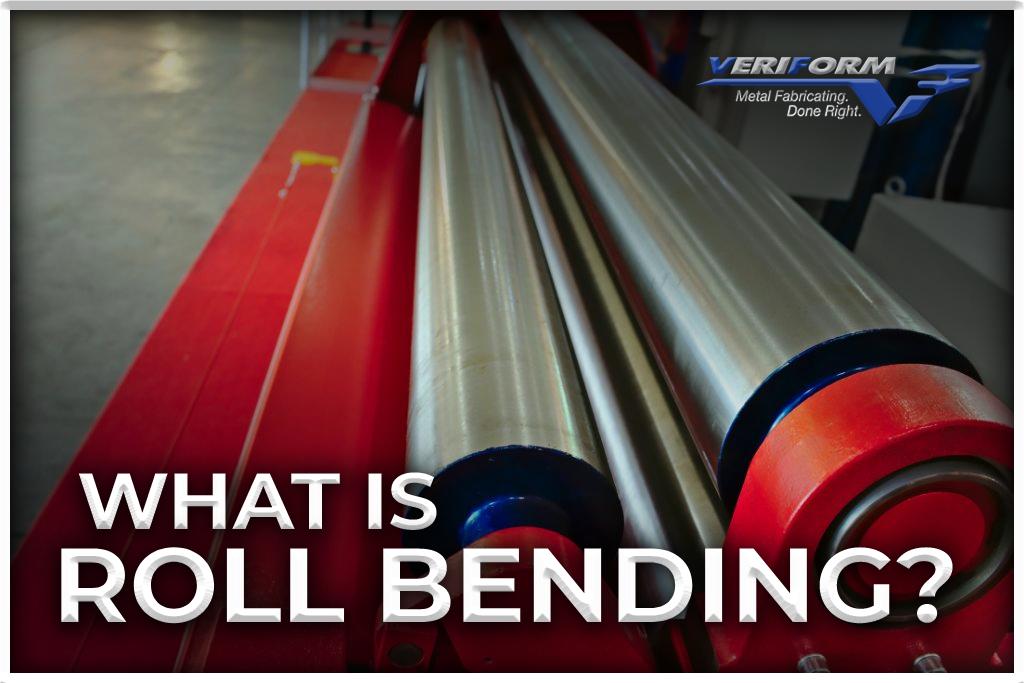
Roll bending is an indispensable technique in the world of metal fabrication. It’s a process that allows us to create intricate, curved shapes out of metal sheets, bars, and tubes. This article will take a deep dive into the world of roll bending, discussing what it is, the different types, applications, advantages, and limitations. So let’s jump right in!
What is Roll Bending?
Roll bending, also known as plate rolling or angle bending, is a metalworking process that uses a series of rollers to bend a metal piece into a specific curve or radius. The metal is forced through the rollers, progressively applying pressure to shape the material into the desired curvature. This process is commonly used for manufacturing pipes, tanks, and other cylindrical or conical shapes.
What are the DifferentTypes of Roll Bending
There are several types of roll-bending machines, each designed for specific applications and materials. Here are three of the most common types:
Three-Roll Bending: This method uses three rollers arranged in a triangular configuration. The metal is passed between the rollers, which apply pressure and cause the material to bend. This is the most common type of roll bending and is suitable for a wide range of applications.
Four-Roll Bending: This method uses four rollers, providing more control over the bending process. This type of roll bending is ideal for creating complex shapes and tight radii and is often used for precision work.
Vertical Roll Bending: This type of roll bending uses vertically aligned rollers. It is ideal for bending heavy, thick materials and is often used in industries such as shipbuilding and construction.
What Are The Applications of Roll Bending
Roll bending is widely used across various industries due to its versatility and precision. Here are some of the most common applications:
Manufacturing Industry: Roll bending is essential in producing storage tanks, pressure vessels, and large pipes.
Automotive Industry: The automotive sector relies on roll bending to create components such as exhaust pipes, fuel lines, and chassis parts.
Aerospace Industry: In the aerospace industry, roll bending produces wing spars, fuselage sections, and other critical components.
Advantages of Roll Bending
Roll bending offers several benefits over other metalworking techniques:
Versatility: Roll bending machines can handle various materials and thicknesses, making them suitable for various applications.
Efficiency: The process is relatively quick, especially when compared to other metal bending techniques.
Precision: Roll bending can produce tight
radii and complex curves with high accuracy.
Minimal Material Waste: Since the process relies on precise bending, there is minimal material waste.
Limitations of Roll Bending
Despite its many advantages, roll bending has a few limitations:
Material Limitations: Some materials, such as brittle metals, may not be suitable for roll bending due to the risk of cracking or breaking.
Initial Investment: Roll bending machines can be expensive, especially for small businesses or those with limited budgets.
Skilled Operators Required: Operating a roll-bending machine requires a certain level of skill and experience, which may necessitate additional training for staff.
Choosing the Right Roll Bending Machine
When selecting a roll-bending machine, consider the following factors:
Material Type: Ensure the machine is designed to work with the specific material you will be bending.
Bending Radius: Choose a machine with the appropriate bending capabilities for your required radius.
Machine Size and Capacity: Consider the size of the machine and the maximum capacity it can handle to ensure it meets your production needs.
Roll Bending vs. Other Bending Techniques
While roll bending is an excellent choice for many applications, it’s also essential to consider other bending techniques. Here’s a comparison with two other popular methods:
Press Brake Bending: This method uses a press brake machine, which applies force to a metal piece to create bends. Press brake bending is suitable for creating sharp angles and is ideal for producing small, intricate components. However, it can be slower and less versatile than roll bending.
Rotary Draw Bending: Rotary draw bending uses a rotating die to bend the metal around a fixed mandrel. This method is ideal for creating tight radii and is commonly used for tube bending. However, it may not be as efficient as roll bending for large-scale production.
Conclusion
In conclusion, roll bending is a versatile and efficient metalworking process that allows for the creation of complex curves and shapes. With a range of applications across various industries, it’s an essential technique for any metal fabricator. By understanding its advantages, limitations, and alternatives, you can make an informed decision about the best bending method for your specific needs.
FAQs
What materials can be roll bent?
Roll bending is suitable for various materials, including steel, aluminum, copper, and brass. However, some brittle materials may not be ideal for roll bending due to the risk of cracking.
Is roll bending suitable for small-scale production?
While roll bending machines can be expensive, smaller machines are available for small-scale production or prototyping purposes.
How do I maintain a roll-bending machine?
Regular maintenance, such as lubricating moving parts, inspecting for wear, and ensuring proper alignment, can help extend the life of your roll-bending machine.
Can I bend metal with tight radii using roll bending?
Yes, roll bending is capable of producing tight radii and complex curves. Four-roll bending machines are especially suitable for precision work.
What industries commonly use roll bending?
Some common industries that use roll bending include manufacturing, automotive, aerospace, shipbuilding, and construction.