At VeriForm we are always searching for Innovative Fabricating Equipment to supplement our current capabilities. We have recently added two new pieces of equipment that expand our service offerings in new and exciting directions.
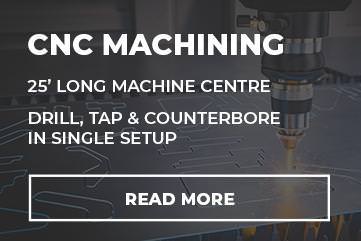
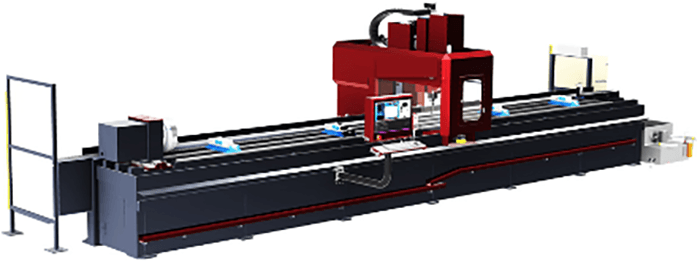
25 FOOT LONG VERTICAL MACHINING CENTRE
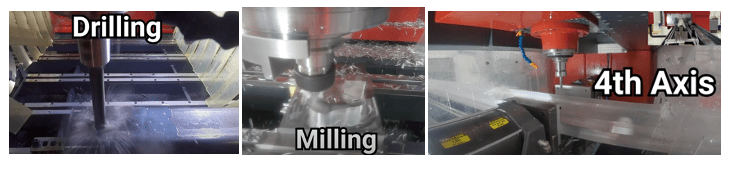
Introducing our new 25ft CNC Machining Centre, capable of high-speed drilling and milling of your large and long parts in one setup with less repositioning. Our new Machine Centre can now machine an XY AXIS up to 2ft x 25ft.
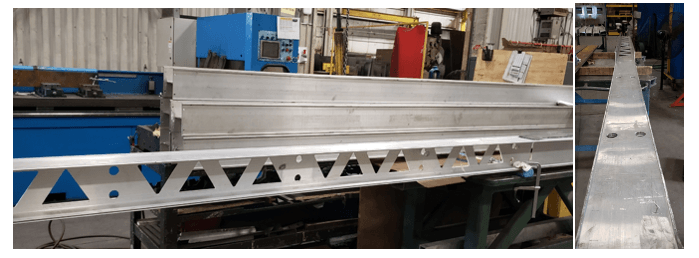
A 5-axis machine equipped with a high speed spindle motor, which can mill, drill, tap and saw tubes, profiles and extrusions in aluminium, steel and composites. With our new 25ft CNC drilling machine we can now offer drilling, milling, tapping and performing other processes on large parts that our smaller 20ft machine did not have the capacity to handle.
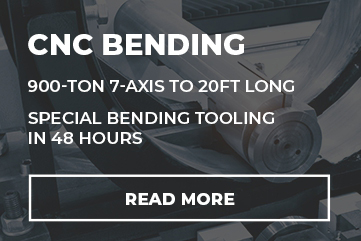
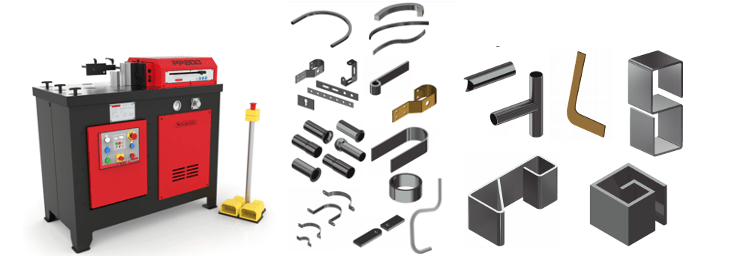
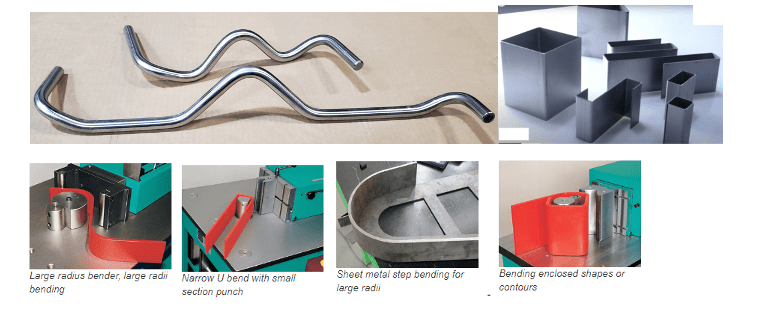
Our Horizontal Pressbrake now allows us to bend pipe, roundbar, flatbar, channel or other HSS in configurations that would be impossible on our conventional pressbrakes. Ideal for bending roundbar and flatbar, this machine is made for producing clamps, bending rods and completely closed-fold fabrications.
Example applications include and are not limited to:
Bending and folding flat bars that allows us to fabricate completely closed pieces that would be difficult to obtain by using other machines
Folding and bending solid rods will enable the user to manufacture all kinds hooks, chain links and also form balusters out of square or round bars, tubes for the manufacturing of parts for cold forging, railings, fences, gates, doors, railings
Bending and curving tubes to different degrees to make tables, chairs, pool ladders, etc.
Straightening and bending large profiles& radii with complicated curves and bends plus the ability to straighten faulty profiles
Cutting and shaping are other features of this versatile forming press for manufacturing flanges and clamps for fastening pipes
Flaring tube or pipe for assembly and subsequent welding to produce exhaust pipes, water pump distributors, metal furniture, railings tube
Widening and reducing the pipe ends permit joining different pipes to make berths, chairs, irrigation systems, tents, greenhouses etc
We can have custom tooling made for your application within a 2 to 3 days. If you have an impossible part to bend, send us a request for quote and we can give you a quick assessment on whether we can bend it for you on our NEW HORIZONTAL PRESSBRAKE!
Call us today for more information on a quote for your machining requirements 519-653-6000
The McGill Reporter article by Ty Burke shares how VeriForm is reducing its energy consumption. Referencing how Paul Rak, President of VeriForm, has taken steps to make his company carbon neutral, and in doing so has made his business more profitable.
The metal fabrication industry is essential for all aspects of modern life. It involves processing various metals into the object we use, live or work in, or rely on for everyday life. Metal fabrication involves engineering or processing raw metals into a finished product or form. Making products, building structures and other applications uses these forms. Metal fabrication, in one form or another, has been around since early civilization. As man evolved from the stone age, he has been working with various metals. Metal fabrication is now a highly specialized and detailed skill trade. The discovery of new metals and metal alloys allows for improved qualities. Our understanding of metals has also improved. Highly sophisticated processes and machinery are now used. Metal fabrication has now become a precise science.
The Impact of COVID – 19
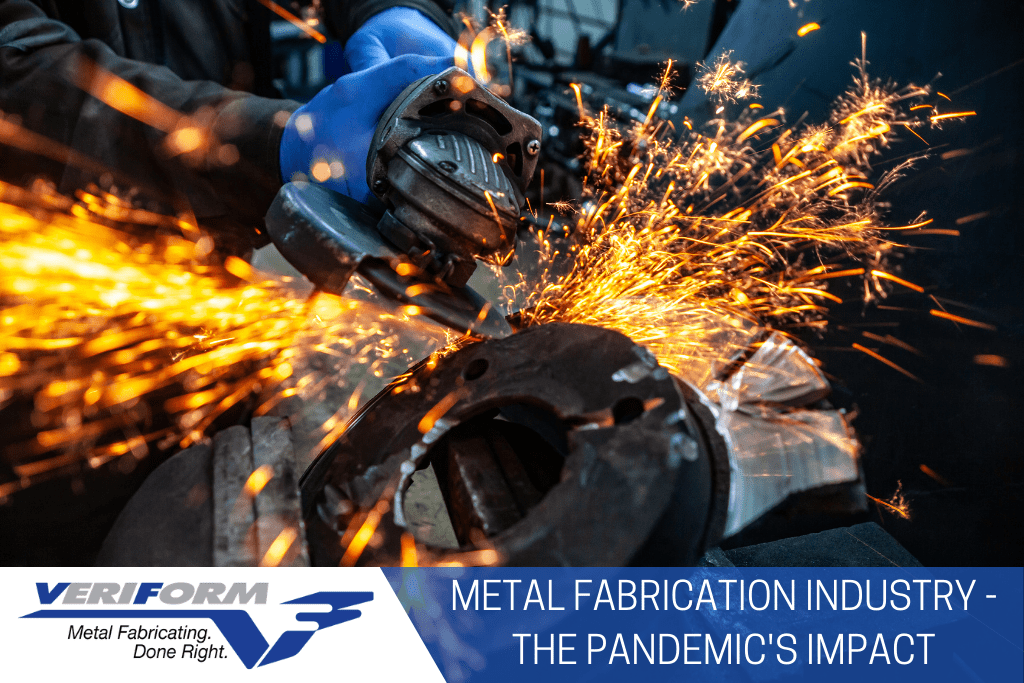
As with all industries, the ravages of the COVID-19 pandemic have hit the metal fabrication industry hard. In most parts of the world, companies had to cease work altogether or slow down and work with a highly reduced workforce. Large construction and infrastructure projects have been put on hold, and many still are. In one form or another, the world has been placed under lockdown. Essential services continued but for many parts of the world, businesses are going through a limbo state. Fortunately, we are now seeing massive improvements in the situation and businesses will surely revert back to normal. Health officials have already rolled out vaccines and soon, businesses will be able to go back to their norm.
The economies of most countries have seen a major decline that will take a while to recover from. Personal income, for many, has been severely affected and the spending power of the average consumer is less than it was before the pandemic. Even the emotional impact of COVID-19 has had a significant impact on the world as well as the economy. While things are improving, most industries, the metal fabrication industry included, are recovering from a dramatic drop in demand, supply chain issues as all links were affected, and a host of other issues. Many staff are still required to work from home. It has been a significant shift for both the staff as well as the companies they work for as many staff are still required to work from home.
VeriForm Inc.
One company that has handled the challenges of COVID-19 extremely well is a Cambridge, Ontario-based metal fabrication company, VeriForm. They have been in business for more than two decades and have built up a solid reputation for quality workmanship, service, and customer satisfaction. VeriForm delivers quality metalworking on a wide range of materials for many industries and applications. They are committed to ensuring that they give outstanding service and strive for complete customer satisfaction. Given their long and illustrious history, it is clear that they are doing things right. The company offers a full range of metalworking services and they are able to handle large projects. Their services include parts fabrication in aluminum, carbon steel, and stainless steel, rolling, welding, and precision machining.
VeriForm’s Response to COVID – 19
VeriForm wasted no time in putting the best policies and protocols into place in order to protect their customers and vendors, as well as their staff. The company acted swiftly and decisively to ensure the safety of all in their environment. Employees that travel have to follow strict guidelines. They have implemented the correct internal practices for infection control. They also reduced all but the most essential face-to-face meetings, visits, and interactions. The results ensured the best possible safety measures for staff, families, vendors, customers, and other parties. See the full details here. This further demonstrates their commitment to long-term sustainability and care for their customers and partners.
Final Thoughts
Working with the best metal fabrication company is critical to the success of your project. Now that life and business are starting to return to normality after the challenges of the pandemic, there are many opportunities. If you have any metal fabrication needs, take a look at VeriForm today. You can find details of their extensive services as well as details of their capabilities and examples of past projects they have achieved. You cannot compromise on the quality of workmanship and professional service if you intend to deliver good results yourself.
A Pivot (https://www.gopivot.org/) article by By Pascal Henrard talks about the changes Paul, President of VeriForm, brought to the company that allowed him to save money and maximize production.
To read the full article we encourage you to visit the #gopivot website here
A Pivot (https://www.gopivot.org/) article by By Pascal Henrard shares how VeriForm is reducing its energy consumption.
“I’m very competitive. I don’t like it when you say it’s not possible. I always do my best to make it possible.”
It is with great pride that Paul Rak, President of VeriForm, explains the effective steps he has taken to reduce his company’s greenhouse gas emissions. To read the full article click here.
Pivot (https://www.gopivot.org/) has shared a fascinating article about VeriForm’s initiatives to going green.
“What can I do at work to make this world a better place for my daughter?”
Paul Rak, the president and owner of VeriForm, explains how his metal parts company has taken a green turn to act on climate change. Learn more about the steps he has taken to reduce greenhouse gas emissions.
Becoming a metal fabricator can be a great career that can offer growth and advancement opportunities as technology continues to evolve. Your job will be challenging and technical, but rewarding. It requires precision, dedication and industry-related skills. Depending on the project you are working on and your level of experience, you may even be able to have some creative freedom on certain projects. In terms of salary, $46,800 is the common average salary for the industry in Canada. Entry-level metal fabricators may receive around $32,000 a year.
There is always going to be demand for metal fabricators due to the skilled nature of the trade. Accurate metal fabricating is important to a wide range of industries and trades such as construction, plumbing, and engineering.
As the industry continues to evolve, there will always be an increasing demand for accurate metal fabricating and skilled fabricators who can adapt to new technologies and practices. Keeping ahead of the curve will allow you to take advantage of great opportunities as a metal fabricator.
How Do I Become A Metal Fabricator?
In terms of becoming a metal fabricator, there are a few qualifications and experiences you will need. The most basic requirement is graduating from secondary school, where you may be able to complete a series of related courses. Subjects such as maths and physics will be beneficial. It’s then highly likely that you’ll need to complete an apprenticeship at a relevant college.
Most regions will provide a few options for an apprenticeship, so it’s best to do some research. In Ontario for example, you’ll need to become a member of the College of Trades and complete their metal fabrication apprenticeship. The course is approximately four years to ensure someone has a thorough understanding of metal fabrication, including hundreds of hours of work experience and on-the-job learning.
Once you have completed an apprenticeship, you’ll receive a college certificate or diploma. You can then use this to apply for registration and certification as a tradesman. This will likely come in the form of Canada’s Red Seal program, obtained through the Industry Training Authority. This will grant you “journeyman” status and allow you to work anywhere in Canada. Certification isn’t strictly necessary in many regions, but it will help unlock more opportunities for you. Check your local regulatory authority to see what kinds of qualifications and certifications they require.
Making sure that you have experience with industry tools such as CNC machines and the accompanying software can help advance your career. Consider taking additional courses and qualifications in areas such as Computer Assisted Design (CAD), technical drawing, and welding.
About The VeriForm Team
VeriForm is one of Canada’s most established and experienced metal fabrication companies based in Cambridge, Ontario. For 23 years they have been committed to providing exceptional service to clients across North America. VeriForm subscribes to ISO 9000-2015 quality standards to ensure their staff delivers accurate metal fabricating at all times.
VeriForm is committed to three central values; community, education, and sustainability. They offer services such as bending, rolling, and CWB welding with both sheet and structural metal components. They are adept at using CNC machines to deliver high-quality results to their customers.
The company plays an active role in the local Cambridge community. VeriForm has partnered with the Cambridge Chamber of Commerce and other local non-profit organizations to help give back to the community. With a strong commitment to the further education of their staff, VeriForm finances additional courses and training for their employees. Working for VeriForm is a great way to further increase your experience and skills in the metal fabrication industry.
They are also committed to improving the sustainability of the business. They are aiming to become carbon neutral and have reduced their carbon emissions by 75% over the last few years. Their accreditation in sustainable quality standards allows them to be more responsible when consuming energy.
Whether you’re a journeyman fabricator looking for a fantastic opportunity to advance your career or a prospective client who requires a custom metal fabrication project, contact VeriForm for more information about their process, service and industry.
In essence, metal fabrication is the act of creating parts, components, and frames from raw metals. This can range from relatively simple parts or actions, such as cutting an existing piece of metal in two with a cutting torch, to more complicated applications like casting extremely fine components for an engine.
Several common fabrication processes include cutting metals into more manageable sections, shaping the metal to the desired form, or fixing two or more metal pieces together through welding. Casting is another process that is often used. Metal that has been molten down is poured into a casing or mold to form more detailed shapes.
Other processes include punching or stamping. The former creates holes in the metal where fixings such as screws can be fastened, while the latter involves pressing a stamp against the metal to indent details like numbers or a company name.
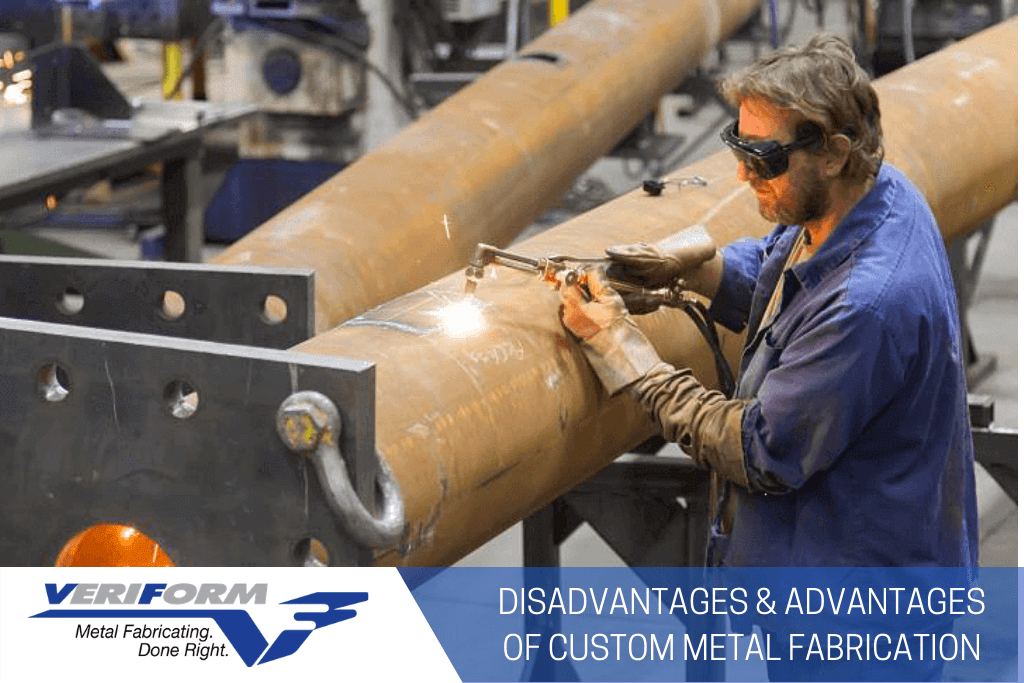
But custom metal fabrication is much more involved. This process involves following more detailed specifications to create something focused on a specific purpose. This could be a roll cage for a racing car, or an intricate metal wall sculpture. Custom fabricators often use complex tools such as plasma cutters or CNC machines and can offer processes such as bending, forging, and rolling to meet your exact specifications.
Different Types of Metal Used in Fabrication
The types of metal used in the fabrication process can be defined either by the raw material itself or the format that it comes in. Four main raw metal materials are commonly used in the fabrication process; aluminum, copper, carbon steel, stainless steel, and titanium. These metals are all used for various applications, such as engine components, pipework, steel girders, and building components.
These metals can also be divided into different working formats. The two main formats are sheet metal and structural metal. Sheet metals are essentially large sheets of metal that can be purchased in different sizes and thicknesses. They can be cut into smaller pieces, or have specific designs cut out of them using water jets or CNC machines.
Structural metals are raw metals that have been shaped into different forms. Pipes are a good example of a type of structural metal, and they can be referred to as Hollow Structural Shapes. They can be circular, elliptical, or square. Other examples of structural metals include beams or girders.
Advantages of Custom Metal Fabrication
There are three main advantages to choosing custom metal fabrication for your next project.
1) The Client Has Control: Hiring a custom metal fabricator enables you to ask for exactly what you need. The fabricator will produce something that will perfectly fit what you need it to do. For some projects, this is necessary as certain components can’t be found elsewhere. You’ll also get the custom fabricated pieces within a deadline that you can choose.
2) Metal is Extremely Durable: Compared to plastic, metal is a very strong and durable material. For components that may be placed under a lot of stress like valves or engine components, metal will be able to stand up to the punishment. Metals also have much higher melting points than materials like plastic, which makes a custom fabricated metal piece more resistant to higher temperatures.
3) Metal is More Malleable: Metals are much easier to work with than materials like plastic and can be tailored to fit a wide range of applications. For example, the properties of many metals allow them to be bent without losing strength. This is useful for applications such as pipework or custom items such as handlebars or exhaust pipes.
Disadvantages of Custom Metal Fabrication
However, custom metal fabrication does have some disadvantages compared to other options such as:
1) Higher Initial Costs: Whether hiring a fabrication company or setting the equipment up yourself, there is likely to be a premium price when choosing custom fabrication. The machines and tools used in the processes can be very expensive, and this cost will likely be reflected in the estimate from the fabrication company. The materials themselves are relatively cheap.
2) Some Applications Do Not Require Metals: Some needs can’t be met by metals. If the project requires very tight bends or incredibly unique shapes, metal will struggle to accommodate these needs. This is especially true of molten metals.
3) Additional Processes: After a custom piece has been fabricated, it still isn’t ready. Final touches such as deburring, grinding, and painting or spraying may be required to deliver a quality product. This adds time and cost to the project.
If you do require quality custom metal fabrication for your next project, look no further than VeriForm. They ensure only the highest quality of output and adhere to critical led times of 98% or better on-time delivery. Their certified expert fabricators have 23 years of experience in the industry. For more information and to browse their products and services contact VeriForm today.
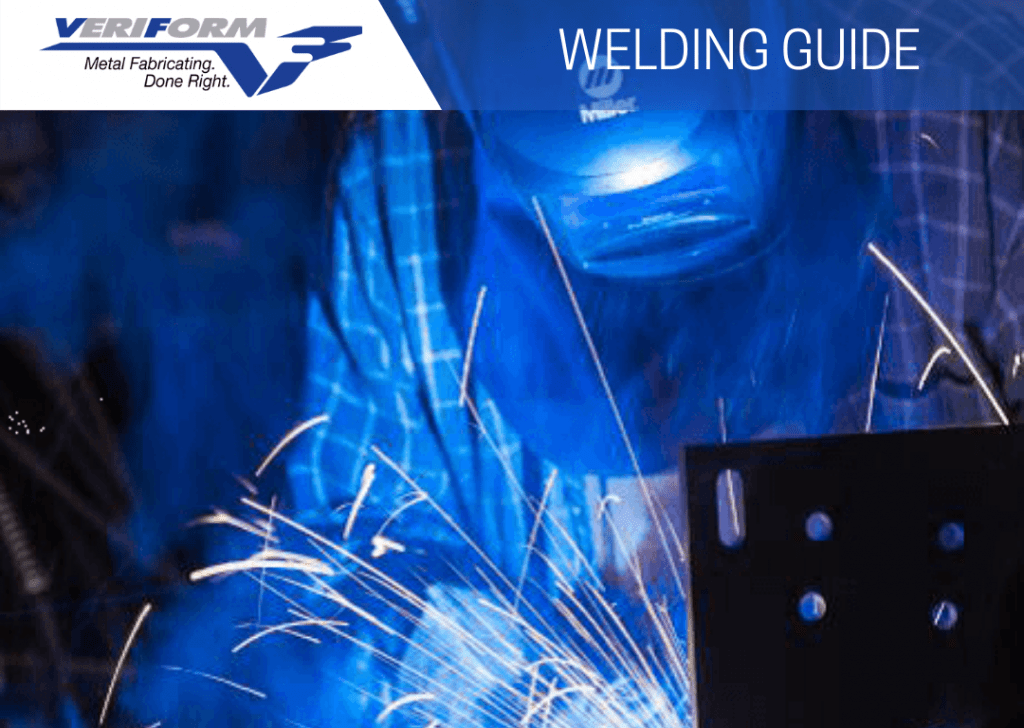
The process of joining two or more metal parts together is called welding. Although most welding is done on metals and thermoplastics, sometimes it is done on wood too. The fusion of the components is done by applying pressure and heat. Many different types of welding processes include shield metal arc welding, gas tungsten arc welding, gas metal arc welding, and pulsed gas metal arc welding. This welding guide will cover everything there is to understand about welding and the different types.
What Is Welding and What Are the Types?
The first thing to understand in this welding guide is the definition and process of welding. Welding is a type of fabrication of metals and thermoplastics where heat is used to meld two or more parts together permanently. These parts are completely fused when the components have been cooled down. During the welding process, the base metal is melted, and a pool of molten material is created with the help of filler material.
The metals joined together are called parent material or base metal, and the material used to form the joint is called a consumable or a filler. The filler chosen can be the same material or similar to the parent material. Many different energy sources are used, including gas flames, electric arc, laser, friction, electron beams, and even ultrasound. Welding parent material together can be done through various joint configurations. These are the butt joint, T-joint, edge joint, corner joint, cruciform joint, and lap joint.
Welding is done through various processes, including arc, friction, laser, electron beam, and resistance. However, arc welding has become one of the most preferred methods in today’s times. We will discuss it in detail in this welding guide. Arc welding uses an electric arc to produce the heat that melts and joins the two-parent material. An AC or DC power supply is used to create heat that melts the metal. The different types of arc welding are:
Shield Metal Arc Welding: Shield metal arc welding or manual metal arc welding, or stick welding is one of the most used processes. In this process, an arc is fixed between the flux-coated electrode and the base material. Both of the pieces melt with the heat, and a weld pool of metal is created. The flux coating on the electrode also softens and forms slag plus gas that acts as a protective barrier for the weld pool against the atmosphere. Using shield metal arc welding, one can fuse ferrous metals such as aluminum and steel as well as nonferrous ones.
Gas Tungsten Arc Welding: The gas tungsten arc welding uses a non-consumable electrode that is used to create a weld between the two base materials. This technique uses a tungsten electrode to make the arc, and once the base material is fused, the inert shielding gas is produced to protect the molten pool from the atmosphere.
Gas Metal Arc Welding: Gas metal arc welding uses a consumable metal inert gas wire electrode which is fixed onto the workpiece metal. The MIG wire heats the base metal and causes the weld pool. A shielding gas produced from the welding gun protects this weld pool from corrosion and other atmospheric contaminants.
Pulsed Gas Metal Arc Welding: Pulsed gas metal arc welding is a technique that uses lower heat to make very precise welds between the two parts. Both heat-sensitive aluminum and steel metals can be welded with the help of GMAW-P. This technique allows precision to control the arc, leading to faster filling and better weld durability.
Finding The Right Welding Company
Welding fabrication can be used to shape and mold metals into a variety of shapes. However, the durability of these welded products depends on the work of the welding engineer. Welding technology has improved drastically throughout the years and is now available for a wide variety of metals. Finding good welding services can sometimes be a challenge.
The welding engineer, as well as the team, should be experienced and skilled. Companies such as VeriForm have over 20 years of experience along with good customer feedback. Finding a company with experience, skill and appraisal always mean that you will get quality work. Always research the reputation of a company before handing off your projects to them. For a welder to be qualified, they need CWB CSA W47.1 certificates just like every employee at VeriForm has. Experienced engineers can advise you on the different techniques that can be used for your product and create the most durable welds.
Learn More At VeriForm
This welding guide has covered the basics of everything you should know about welding and how you can find a good welding company. VeriForm is one of the best companies that provide welding services for industrial as well as housing projects. You can visit VeriForm to find more about other services and rates. It is important to note that if you want to ensure the welding’s durability and quality, you should always employ experienced and trained professionals to do the job. If you have any other welding inquiries that you would like to discuss with a member of the team feel free to contact us.
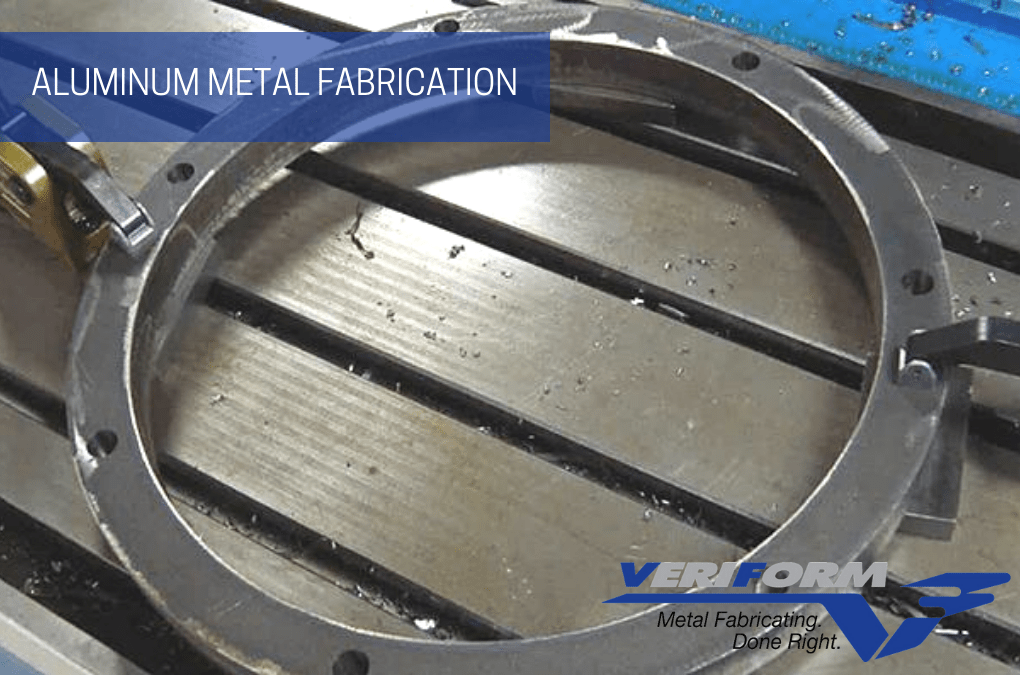
Aluminum is one of the most durable metals, and its robustness makes it suitable for various uses. The aluminum metal fabrication process can mold this metal into any desired product such as solar panels, tools, or any other desired shape. Aluminum products are used in various industries, including housing, energy, electronic enclosures, medical, aerospace, defence, and many more. Projects including CAD/CAM and Solidworks, custom tooling designing, prototyping, Design/DMEA, and formed parts flattening can be done through the process of fabrication.
Even though there are numerous benefits of using aluminum fabrication, the process in itself is complicated. Aluminum metal is softer than steel, and hence its handling needs to be done only by professional companies such as VeriForm. This article will cover a majority of everything there is to know about aluminum metal fabrication and the kind of projects that can be done through this process.
What Is Aluminum Metal Fabrication?
Aluminum metal has a unique set of properties that make it one of the most popular materials for fabrication. It is lightweight, has an excellent strength-to-weight ratio, is soft and easy to shape, resistant to corrosion, and is nontoxic. The fabrication of aluminum can be done through various techniques. These techniques include extrusion, drawing, forming, casting, forging, welding, adhesive bonding, machining, drilling, CNC laser cutting, and CNC plasma cutting.
Types of Aluminum Metal Fabrication Services
Numerous services come under aluminum metal fabrication. These services aid in designing products and parts with metal. The entire fabrication process includes designing the component and manufacturing it. Explained below are some of these fabrication services:
CAD/CAM and Solidworks: Computer-aided design and manufacturing are two very advanced yet useful aluminum fabrication services that any good company will provide. The CAD is used to design the parts with various software, and CAM used these designs to manufacture the parts for model generation. At VeriForm, the process is done with the help of Solidworks software. Solidworks is one of the best CAD and CAM software that offers 2D and 3D model designing features for engineers.
Custom Tooling Designing: Tooling is the procedure used to design and engineer specific tools required to manufacture individual components. VeriForm offers custom tooling designing, which means that the tools are customized depending on the product’s as well as the companies’ needs and manufacturing.
Design/FMEA and Prototyping: FMEA or Failure Mode and Effects Analysis is a method of analyzing any potential defects and failures in the product’s design. Another process that is a part of aluminum metal fabrication is prototyping. It means creating a small prototype of the aluminum part and checking its usability before manufacturing the entire product.
Formed Parts Flattening: The process of taking something with a round shape or raised shape and pressing it down to form flattened parts is called flattening.
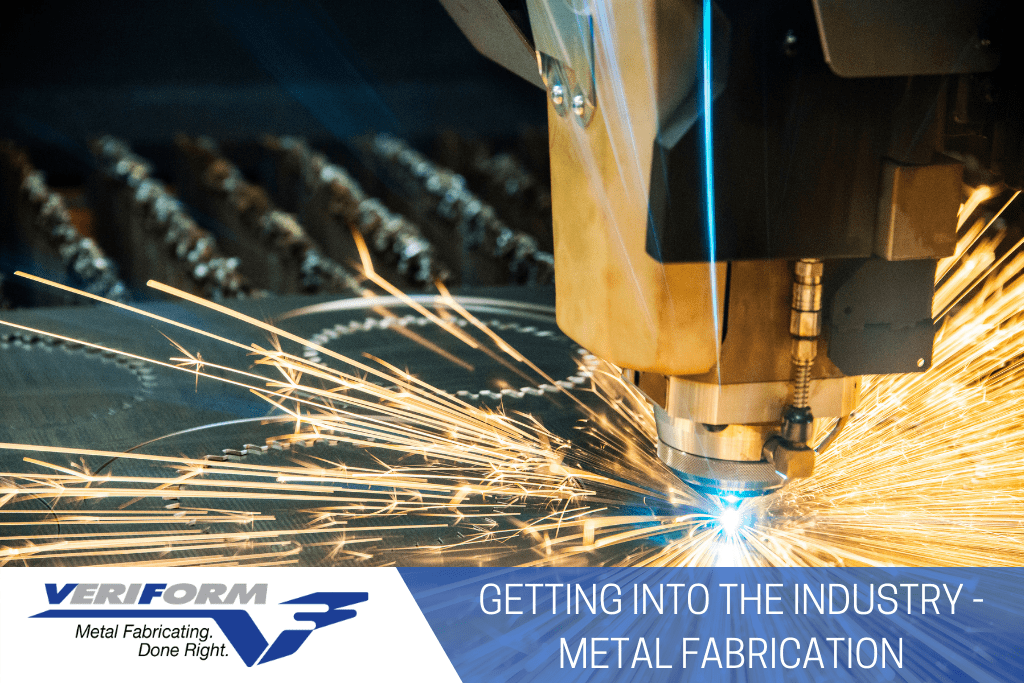
CNC Plasma and Laser Cutting: Plasma cutting is a process in which an accelerated jet of hot plasma is used to cut aluminum, and laser cutting is the process that uses laser beams to make these cuts. The plasma cutting at VeriForm can be done on stainless steel and aluminum from 18ga to 1.5” thick x 18.0 ft. x 40 ft. table. The laser cutting can be done up to ¾” x 80” x 160” (4000W) +/- 0.005” Accuracy.
Shearing: The process of cutting straight lines on a flat metal is called shearing. At VeriForm, the CNC shearing process is used up to ½” x144” with a 48” CNC back gauge.
CNC Punching: Computer numerically controlled punching is a process in which different sized holes are punched on an aluminum sheet pre-designed and controlled through computer software. The punching can be done on aluminum sheets of up to 1.5” diameter in 1” metal.
CNC Bending Forming: The process of reshaping the metal sheet from flat to bent through a press and computer numeric control is called bending forming. The press at VeriForm can do complex kinds of bending of metal to any shape. They have machines that are capable of bending 56-tonne x 48” parts to 900-tonne 7-Axis CNC X 240” to ¾” x 20 fee bending parts.
Welding: Joining two or more sheets or aluminum parts together is called welding. VeriForm has CSA 47.1 Division 2 certified MIG/TIG/Spot welding facilities. Additionally, they also offer 10 welding stations, assembly services, and painting the parts for a quality finish.
Finding the Right Professional
Aluminum, although very durable, is a metal that needs careful handling because of how malleable it can be. Welding of aluminum and laser cutting has to be done with precision because of aluminum’s high thermal conductivity. The high thermal conductivity of the metal makes fusion while welding tougher. Also, the property makes it challenging to cut thicker sheets of aluminum. Hence the laser cutting has to be done on thinner sheets. These are some points that inexperienced professionals tend to ignore.
That is why only trained, and experienced professionals will provide you with the results you need. VeriForm has over 20 years of experience in this field. They have all the latest equipment and an experienced team that can handle aluminum parts with components of up to 20 ft. They also provide services such as oversize bending and rolling along with a two-day turnaround for tooling and prototypes. Quality engineering assistance along with the above-given services is what makes VeriForm one of the leaders in the metal fabrication industry. All the more, they have CWB CSA W47.1 certified welders and skilled engineers that overlook all the activities.
Aluminum metal fabrication is one of the most useful techniques within this industry. That is why it is imperative to find the right company such as VeriForm. It knows the challenges associated with handling aluminum and has a team of experienced professionals to ensure that you get quality products. Contact us today to learn more about aluminum fabrication and how it is done along with other services.