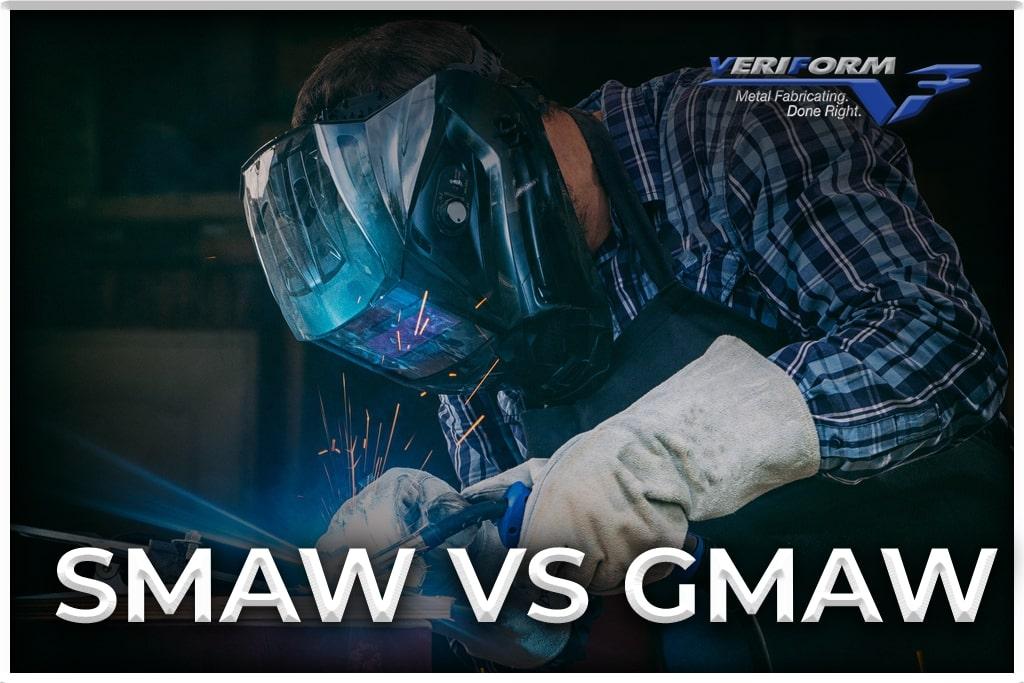
Shielded metal arc welding and gas metal arc welding (SMAW and GMAW for short) are two of the most commonly used welding techniques. However, those outside the industry don’t always understand the difference between SMAW and GMAW, making it difficult for them to select the right process for their metalworking project. In this blog, we explain how each option works, the differences between them, and when you might want to choose one over the other.
What is SMAW Welding?
Shielded metal arc welding (SMAW) uses stick electrodes with a flux coating on their surfaces. The process is used to weld ferrous metals like alloy steel, carbon steel, stainless steel, and cast iron. SMAW is typically used in fabrication work, although it can be applied in tasks like maintenance and repair.
After an electrode is placed in the holder, the electric supply is activated. Immediately after tapping the electrode on the metal workpiece, it is immediately withdrawn. The result is an electric arc with a high temperature that melts both the electrode and the workpiece.
During welding, the electrode transfers metal beads onto the workpiece, forming a weld pool. As flux melts, a shielding gas is released, covering the weld pool and preventing contamination. It is necessary to stop the process periodically to replace the electrode. The slag layer is chipped off after the weld pool solidifies.
What is GMAW Welding?
During gas metal arc welding (GMAW), a wire electrode is used, and no flux is added. GMAW welding, which can be used for alloys and metals like aluminum and stainless steel, is usually applied in metal fabrication and automotive processes. It’s also frequently seen in tasks involving brazing work and pipework.
The GMAW welding process is relatively straightforward. Once the shielding gas pressure and wire feed rate are selected, the DC supply is turned on and the electric arc is set up by tapping the electrode wire and withdrawing it. During the transfer of metal from the electrode to the weld pool, the shielding gas (usually argon, carbon dioxide, or helium) is ejected on the metal by the welding gun. Shielding gases are chemically inert, meaning that they do not interact with the weld pool. For this reason, GMAW is also known as metal inert gas welding, or MIG welding.
There are four types of GMAW welding:
Short Circuit: An arc occurs between the consumable electrode wire and the base material, resulting in a short.
Globular Transfer: The Globular method generates a large volume of weld metal that drips into the joint, as the wire is heated longer.
Spray Arc: Weld joints are sprayed with small droplets of molten metal from the consumable electrode.
Pulsed MIG: Pulse MIG welding produces one droplet of molten metal at the end of the consumable wire and the current, which pushes it across the arc and into the weld puddle.
What is the Difference Between SMAW and GMAW?
There are several important differences between the two processes.
With GMAW welding, electrode changes are unnecessary because a wire feeder keeps supplying the gun with the electrode wire. This difference makes it more efficient than SMAW.
An SMAW electrode has an external flux covering (one reason why it is known as stick welding), whereas a GMAW electrode has an external shielding gas.
Due to its ability to lay down cleaner welds, GMAW promotes better efficiency. SMAW can leave slag deposits on the weld surface due to the vapourizing flux. The slag must be painstakingly removed once the weld has hardened, increasing the overall project duration. With GMAW, welds require less secondary cleaning.
VeriForm Inc.: Steel Fabricators You Can Trust
When you work with the steel fabrication team at VeriForm, you can be confident that whatever process is used (SMAW or GMAW), the welds will hold up to their intended applications. To ensure all specifications are met, we employ only CWB CSA W47.1 and W59 certified welders and retain a qualified CWB certified welding engineer. CWB-certified welding supervisors will also oversee your project from start to finish. To learn more, please visit our website, call 519-653-6000 or contact us online.
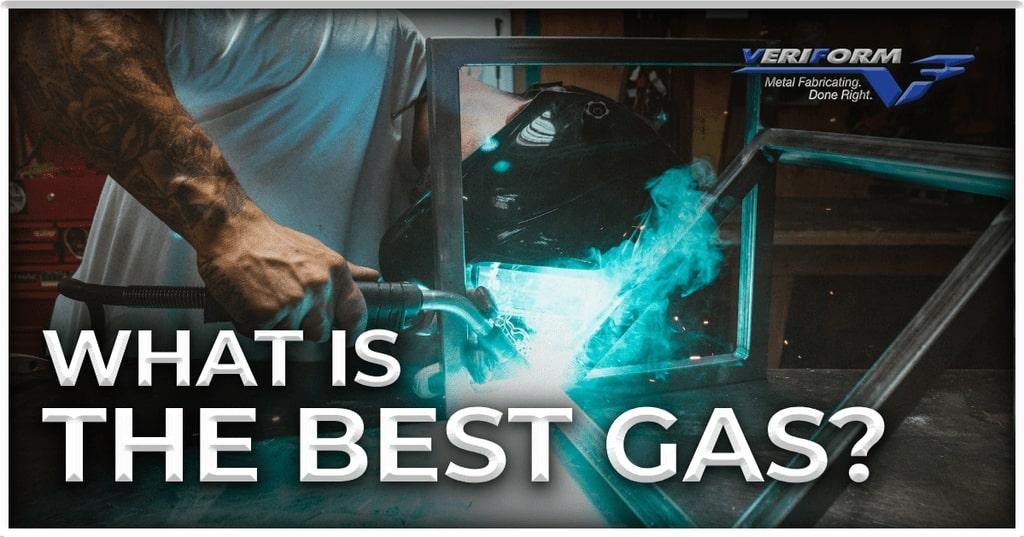
MIG welding is an arc welding process that uses consumable electrode wire along with gas that comes out of a nozzle that is connected to gas cylinders that contain different types of gases based on which metal is welded from here we take a deep dive into the types of gases used.
This also leads us to an important question of why gas is used in the welding process. The answer to this question is in the following points:
Shielding
Purging
Blanketing
Heating
Using Inert Gases Only for MIG Welding
As mentioned earlier, Argon has very low chemical reactivity. Using it alone for the welding process has its pros & cons.
Advantages of Using Argon in MIG Welding
Handles long arcs at low voltages.
Great results with non-ferrous metals like aluminum, copper, titanium, etc…
Disadvantages of Using Argon in MIG Welding
The filler remains on top causing a tall bead.
The outer edges of the arc remain cold, reducing penetration.
Moreover, helium is not often used alone but rather mixed with argon to benefit from both gas properties. For example, helium burns hotter allowing the penetration of the welding to become deeper welds.
Using Reactive Gases Only for MIG Welding
In MIG welding Carbon Dioxide (CO2) is the most commonly used reactive gas. It is the only reactive gas that can be used alone without mixing it with any inert gas.
Advantages of using only CO2 in MIG welding
It’s the cheapest option out of the shielding gases. This makes it an attractive choice when low material costs are your main priority.
Using only CO2 results in very deep weld penetration, which is useful for welding thick material.
Disadvantages of using only CO2 in MIG welding
It has a less stable arc and more spatter is produced than when it is mixed with other gases.
The short circuit process is the only welding option if your using CO2 gas.
Oxygen Is another reactive gas that is mixed with either inert gas like argon or with reactive gas like CO2 but adding a very small proportion of oxygen to any of these gases can change the result of welding dramatically.
Mixing Inert & Reactive Gases for MIG Welding
When welding, it is important that the welder uses proper mixing techniques for the inert and reactive gases. Two different types of gases are used in MIG welding which needs a design process for creating the optimal MIG welding mixture. To do so it is important to consider the cost, availability, and source of each gas. For example, if high-purity helium is not available, lower-purity gases can be used with minimal negative effects on weld quality and fusibility.
In addition to chemical properties, physical characteristics such as temperature, pressure, and composition must also be considered when planning a MIG Welding mix formula. the below table shows some of the mixing techniques used.
Metal
Thickness of Material
Shielding Gas
Carbon Steel
5/16 in. (8 mm) – 3/8 in. (10 mm) 3/32 in. (3 mm) – 5/8 in. (15 mm) 3/32 in. (3 mm) – 5/8 in. (15 mm) Above 3/8 in. (10 mm)
95% Ar + 5% CO2 92% Ar + 8% CO2 90% Ar + 10% CO2 80% Ar + 20% CO2 / 75% Ar + 25 % CO2
Aluminum
Up to 3/8 in. (10 mm) OIver 3/8 in. (10 mm)
100% Ar Ar +25%, 50%, or 75% He (Based on temperature)
Stainless Steel
1/25 in. (1 mm) – 1/4 in. (6 mm) 1/16 in. (2 mm) – 1/4 in. (6 mm) 1/16 in. (2 mm) – 1/4 in. (6 mm)
Ar + <35% He + <3% Co2 98% Ar +2% O2 10% Ar + 85%-90% He + 2-5% CO2
Best Practices for Choosing the Right Gas for your Welding Project
It’s important to pick a gas or gas mixture that matches the material being welded since some materials need certain types of gasses to properly weld. However, it also depends on cost and availability. For example, the most common gas used for MIG welding is argon because it has less carbon than other gases & doesn’t produce harmful gases to the environment. On the other hand, argon is much more expensive or penetrating compared to CO2.
For the best results consider the following:
The penetration of the gas used.
Arc Stability.
Precautions for every gas & suitability for your welding environment.
The availability of the gases used. For example, helium gas is not always available everywhere so replacing it with other gases might be the better option for a given situation.
Cost of the gases. Argon & helium are not cheap while CO2 is very cheap compared to the other two inert gases.
Lastly setting the quality of the weld you want will make the decision much easier & precise in choosing the right gas or gas mixture.
What Are The Applications, Advantages & Disadvantages Of Waterjet Cutting?
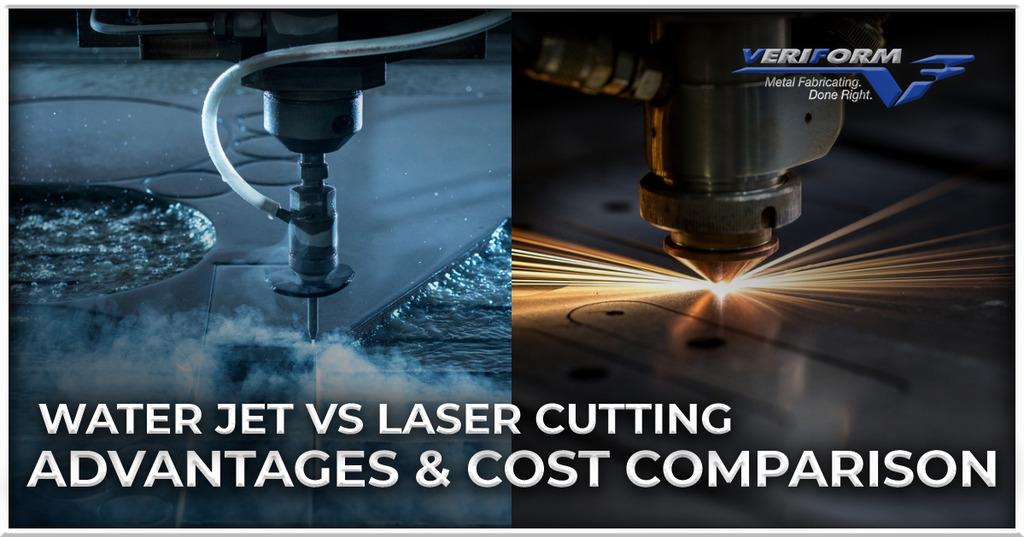
Water jet cutting is a process that uses high-pressure water to cut materials. Waterjet cutting can be used to cut various materials, including metal, stone, glass, and plastics. Waterjets are popular in marble & stone factories as it makes it easier for them to cut and shape these types of materials.
Advantages of Waterjet Cutting
Can cut all types of materials, including high reflective materials or unequal material thickness.
The cutting process doesn’t result in overheating of the materials.
Waterjets don’t produce any hazardous fumes or smoke while cutting any materials.
Disadvantages of Waterjet Cutting
High noise output compared to other cutting machines that are available commercially.
Precision can be an issue when cutting thick material.
The high-Pressure force used by the cutting process can cause the deformation of small-sized parts.
What Are The Applications, Advantages & Disadvantages Of Laser Cutting?
Laser cutting is a technology that uses a laser with special optics & computer numerical control to focus the laser beams on the material to start the cutting process. It has a range of applications, from using CO2 lasers to cut plastics & plywood to industrial applications such as using fibre lasers to cut metals & strong materials. Lately, YAG/YVO lasers have been used for rust removal & even human hair removal with high-quality results.
Advantages of Laser Cutting
Laser cutting can achieve a very high accuracy reaching a quarter of the width of human hair.
Very low noise compared to all commercially available cutting machines.
As laser cutting is very common in production lines nowadays, some machines can achieve cutting speeds that exceed 100m/min.
Disadvantages of Laser Cutting
Burn marks on the material – Overheating caused by cutting can leave burn marks on the cutting material.
Ineffective at cutting reflective material – The working principle of laser technology is based on reflected optics, making it inapplicable as a cutting method for any type of highly reflective material.
Higher safety & health regulations – High heat is generated, resulting in producing hazards & toxic smoke from some materials.
What Are The Cutting Costs?
Regarding cost, laser cutting is cheaper than waterjet in several aspects.
If we look at the same machine specs for both technologies, a laser machine can cost around $10,000, while a waterjet can cost up to $30,000.
Laser machines are also much faster it can cut more meters/min than the waterjet machines making them consume less time.
The operation cost of laser machines per hour is lower than waterjets, making it more applicable for production lines.
Conclusion: Who Wins?
If you are keen on cutting all kinds of materials without producing any hazardous or toxic gas, waterjet is your choice. On the other hand, if you are looking for speed & lower cost, then laser cutting is your winner.
LASER CUTTING SERVICES AT VERIFORM
If you’re looking for premium laser-cutting services, look no further than Veriform. Our experts have over 20 years of experience using CNC laser cutting technology. We have provided high-accuracy cuts on some of the largest pieces of metal for clients across North America.
Our laser cutting offers up to 3/4 inches x 80 inches x 160 inches with an accuracy of +/- 0.005 inches. Besides laser cutting, VeriForm also offers numerous metal fabrication services and capabilities, including bending, rolling, welding and more. Contact VeriForm to get an estimate for your cut today!
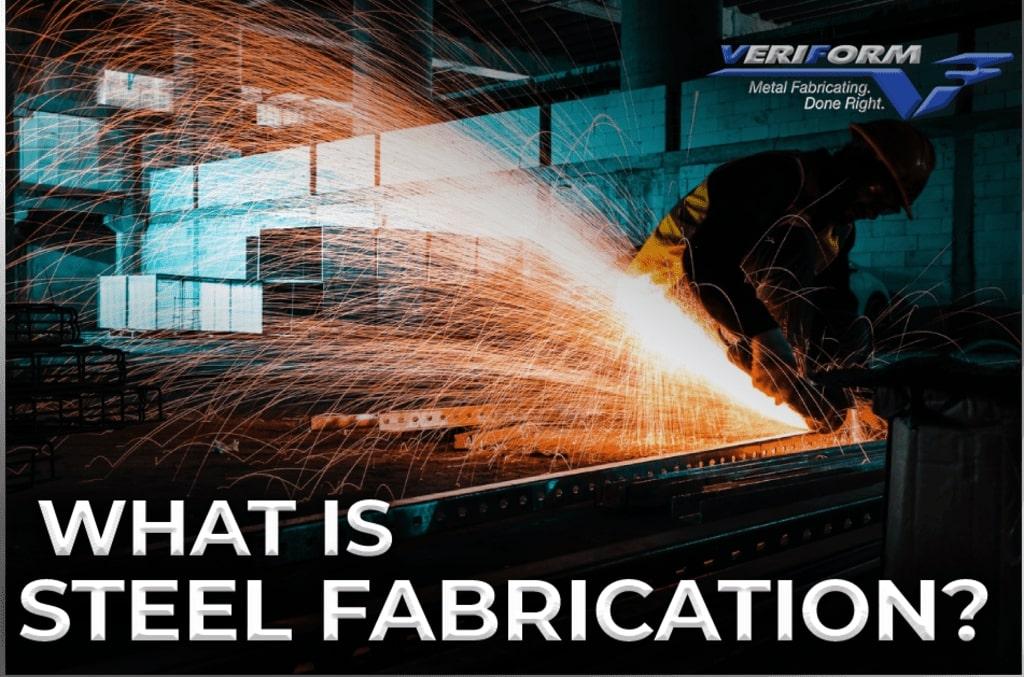
Steel is an alloy of iron and other metals that is used for structural and fabrication purposes. Steel fabrication specifically is the process of transforming raw steel into a tool, part, or other asset used in assembly or construction.
This is a simple and straightforward definition, but steel fabrication today is an advanced and even sophisticated process. In this blog, we provide a brief overview of the fabrication process and discuss the key methods, many of which are in use at VeriForm.
Which Steel is Used for Fabrication?
Carbon steel is one of the most commonly-used materials due to its versatility, strength, and sturdiness. It is available in a variety of thicknesses and stock sizes and can withstand harsh conditions in industrial environments.
Steel fabricators commonly use stainless steel because it is relatively easy to work with. Due to its ability to bend readily, this material is ideal for welding. Applications requiring corrosion-resistant properties typically require stainless steel.
Aluminum is popular as a metal fabrication material because it’s lightweight, which is ideal for industries that need metal but can’t handle the weight. The automobile and aerospace industries are among those that often use this lightweight material.
What is the Fabrication Process?
Steel fabrication can be performed in a variety of ways. Some of the methods employed by steel fabricators like VeriForm are highlighted below.
Bending
Bending involves applying a massive force to a steel piece, usually using hammering or press machines, in order to change the shape. During the bending process, the steel piece is bent using press brakes or tube benders.
Rolling
Rolling is a metal fabrication process where metal stock is passed through one or more pairs of rolls in order to reduce the thickness, to make the thickness uniform, or to deliver a mechanical property.
Welding
In welding, pieces of steel or other materials are welded together or bent using the fusion process, which involves heating steel parts to a high temperature, joining or bending them while they’re pliable, and letting them cool. VeriForm uses advanced welding methods such as:
This method uses tools such as drills, lathes, mills, and others to shave away metal to form a specific shape. Veriform uses the following machining methods to fabricate steel components:
CNC Countersinking: By countersinking, you create a conical hole in your part that matches the angle and head size of a screw.
CNC Drilling: Using a rotating cutting tool, CNC drilling produces round holes in stationary workpieces
CNC Laser Cutting: A CNC laser cutter uses a laser beam to vaporize, melt, or otherwise gradually remove materials. We offer laser cutting services up to 3/4” x 80” x 160” with an accuracy of +/- 0.005”.
CNC Tapping: With tapping, a thread is cut inside a hole, which must be drilled with tap drills and chamfered at the end.
What Industries Require Steel Fabrication Services?
Steel fabrication services are needed across a wide range of industries, illustrating how versatile and reliable steel has become. These industries include commercial and residential construction, aerospace, the military, mining, automotive, and shipbuilding.
VeriForm Inc.: Steel Fabricators You Can Trust
As experienced steel fabricators, VeriForm offers a wide range of steel fabrication services that can be customized according to client requirements. We maintain strict quality control throughout the whole fabrication process to meet and even exceed customer expectations, which is why so many of them have been trusting us with their steel fabrication needs for over 20 years. To learn more, please visit our website, call 519-653-6000 or contact us online.
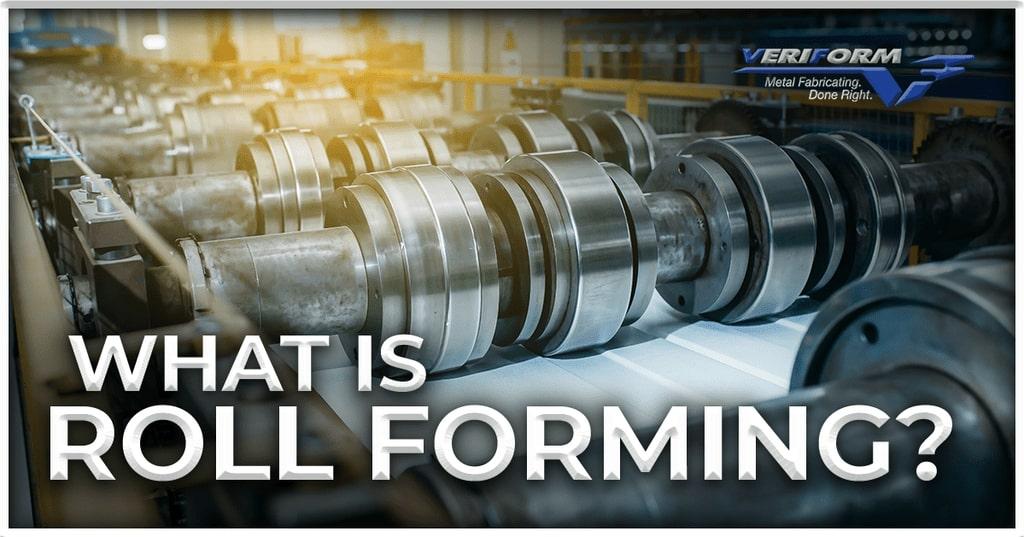
Roll forming is a metalworking process that uses rollers to incrementally bend a strip of metal. In a roll forming machine, the rollers are mounted on consecutive stands. Each one completes a small step in the process, to create products like:
Cylinders and cylinder segments
Metal piping, stacks, and ductwork
Both concentric and eccentric cones
As a process, roll forming has been greatly impacted by technological advancements. Computer Numerical Control (CNC) machines can be programmed to control and direct the entire process, from sequence of operations to part dimensions. The overall measurements can be continuously adjusted, allowing for non-symmetrical shapes and changes in sheet thickness.
What is the Roll Forming Process?
While the actual process can vary from one metal fabricator to the next, the basic steps for producing roll-formed steel are the same.
Roll forming starts with a large coil of sheet metal. After being uncoiled, the metal is loaded into an uncoiler and fed through a flattener to eliminate any distortion before being trimmed to allow smooth feeding into the pre-press.
Typically, a roll forming machine consists of 10 to 24 roller die stands. Metal ribbons are forced through rollers that gradually shape them to the right dimensions. During motion, parts are cut to length, which increases efficiency and speed. Cut pieces are discharged to a run-out table for shipment or further processing.
In some cases, secondary processes accompany roll forming. Many of them can be completed as soon as the part leaves the cutoff. They include:
Notching
Punching
Straightening
Adding components
Minor assembly
What is Roll Forming Used For?
With its high quality, exacting tolerances, rapid production, dimensional accuracy, and lower cost, roll forming has become the preferred method of manufacturing metal products. Roll formed steel is often used in:
Aircraft and automotive components
Construction materials
Hardware for windows and doors
Metal and steel fencing
Metal roofing
House siding and rain gutters
Metal furniture components
Advantages of Roll Forming
Below are a few of the advantages of roll forming.
Efficiency: The self-feeding roll forming machine requires little human monitoring, which lowers labour costs. Adding punches and notches during pre-feeding avoids secondary operations.
Cost-Effective: The smooth finish of completed parts eliminates the need for secondary processes such as deburring or trimming. By producing large quantities of parts, the final product is less expensive.
Improved Quality: Over the course of a complete run, products are more uniform and consistent. Dimensions are extremely precise with tight tolerances. Die marks and deformities are absent, maintaining sharp, clean contours.
Flexible Performance: Both ferrous and non-ferrous metals can be used to produce complex cross-sections. Metal that has been painted, plated, or coated cannot be shaped in some other processes.
Less Scrap: It produces only one to three percent scrap per production run, which is far less than other metalworking processes.
VeriForm Inc.: Experts in Roll Formed Steel
At VeriForm, we have over 20 years of experience in producing rolled metal products. We roll sheet metal and structural metal using our Italian metal rolling machine, which is operated by highly trained professionals who know how to achieve superior results. With 10 foot-wide rolling capabilities, there is no request we can’t handle. To learn more about how VeriForm can meet your parts manufacturing needs, please visit our website, call 519-653-6000 or contact us online.
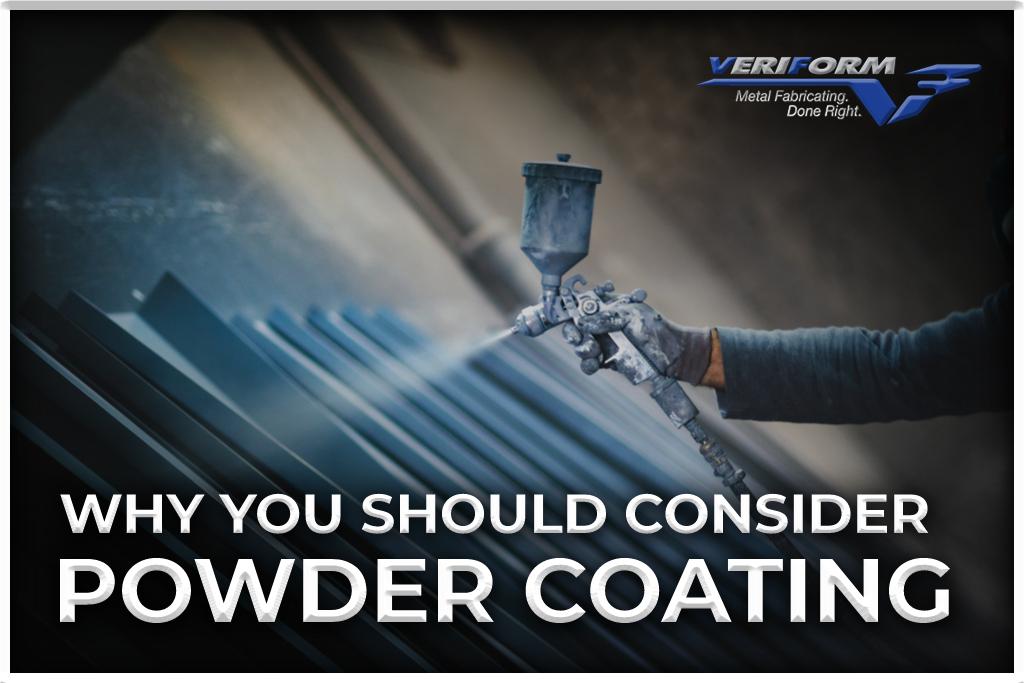
Powder coating is a dry coating process that creates a high-quality finish for various metal industrial equipment and products. Applied as a dry powder through an electrostatic process and then cured with heat. It delivers a high-quality finish that can improve the look and functionality of your metal projects. However, it’s not as simple as it seems. In more depth, let’s go over what it is used for, how this process is done, and why you might want to choose powder coating over paint.
What is Powder Coating Used For?
Powder coating is primarily used to coat different metals, such as those found in household appliances, automobiles, street signs, and other particular metal parts. The result is a smooth, and appealing hard finish that is more durable than traditional paint. Metal fabricators have been using powder coating since the 1940s to make steel parts resistant to heat and cold damage as well as corrosion. Have you ever noticed a steel bench or old balustrade that still looks quite new despite years of use? It’s almost certainly been powder coated.
The Process of Powder Coating
Now the real question, how is it done? This process involves the application of electrostatically charged particles onto the workpiece surface. With most systems, a feeder unit sends the coating to an electrostatic gun, which then emits it as a diffused cloud. The particles, charged by a low-amperage power unit, seek out and adhere to the surface of the metal object. Once the coating has been applied, the workpiece is cured in a specially designed oven. The end result, a strong and durable protective layer.
Generally, powder coatings are cured at about 400 degrees Fahrenheit for approximately 20 to 30 minutes. These parameters may very depending on the type of coating. It is important to note that thorough surface preparation is essential to successful results. This includes removing grease, dirt, and other materials to support coating adhesion. Pretreatments with chemical compounds can also enhance the coating’s durability and corrosion resistance.
The Advantages & Disadvantages
Painting is a traditional method that has several limitations, such as dripping and difficulty controlling thickness. Powder coating is a more advanced technique that delivers a higher-quality appearance while improving the durability. It’s one of the more environmentally friendly options compared to other finishes. Essentially, it’s more resistant to chipping, scratches and fading. It is also less expensive in the long run than alternatives like plating and conventional painting because it uses less equipment, takes less time to apply, and consumers fewer raw materials. However, there are some disadvantages to consider such as:
It tends to break down under UV ray exposure
It’s difficult to mend when damaged
There is less control in terms of speed and amount
Colour change difficulties
It requires a baking process
Contact VeriForm Inc. For More Information
At VeriForm, we are your one-stop shop for metal fabrication. By using cutting-edge technology and our team’s expertise, we can provide a wide variety of capabilities and services including bending, rolling, welding and more. Plus we have our in-house engineers that can help you optimize your plans and designs. To learn more about our services, please give us a call at 519-653-6000 or contact us through our site if you want the job done right, the first time!
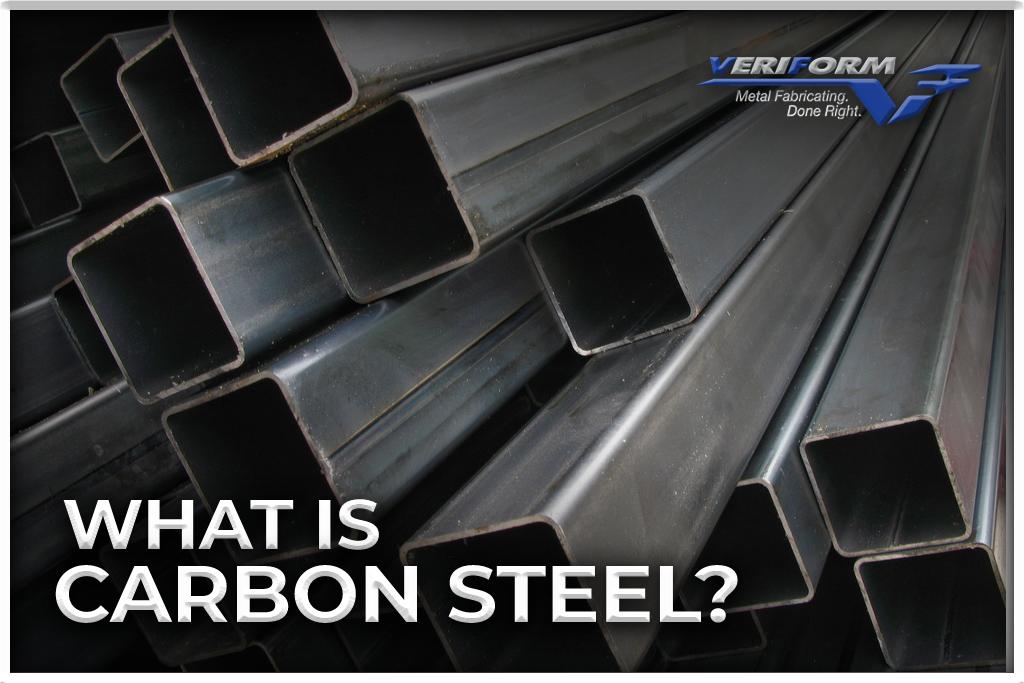
Steel is an iron-carbon alloy that’s durable, strong and often corrosion-resistant. There are currently over 3500 different steel grades, all of them broadly categorized into a handful of types. One of them being carbon steel. It is used regularly for multiple metal fabricating operations. If you’re interested in finding out what it is, why it’s used and what it’s used for, continue reading. This article will discuss the use, as well as the benefits and drawbacks of using this type of steel.
What Is Carbon Steel & How Is It Used?
Consisting of only iron, carbon and trace amounts of other alloy elements, this metal is the purest form of steel that has a dull, matte appearance. Unlike stainless steel, this type is susceptible to rust, but it’s often less expensive and has different properties based on its carbon content.
Low Carbon
Low carbon content steel has about 0.30% carbon content, which allows it to be more malleable under pressure. It is widely used for panelling and fabrication because heat treatments don’t affect it. Its flat-rolled strips and sheets are a staple of the automotive and shipbuilding industry, although low carbon steel is also used in household appliances and certain types of wire.
Medium Carbon
The carbon content in this metal is around 0.60%, which reduces its flexibility but increases its strength. Easy to machine, it appears frequently in bridges and buildings, making it a building industry mainstay. It is also used in railway components like axles, shafts, gears and tracks, as well we household appliances like washing machines and fridges.
High Carbon
Steel with 1.50 to 2% carbon is the strongest. It is used to make blades, cutting tools, dies, punches, springs and wires because of its superior tensile strength. Steel with the highest carbon levels, which is also referred to as cast iron, appears in extremely hard components like large machine parts, cutting tools, and industrial castings.
The Advantages & Disadvantages Of Carbon Steel
This type of steel has several advantages including increased strength and durability that makes it less likely to break under pressure compared to other steel. This makes the steel particularly suitable for applications requiring strength. Examples of this include several centuries ago, Japanese blacksmiths produced swords using high-carbon steel called tamahagane steel. Today, metal fabricators use it in steel parts, automotive components, tools, construction materials and much more.
There are, however, some disadvantages to choosing this type of steel over traditional steel. Since carbon steel is so strong, it doesn’t bend or mold into different shapes easily, limiting its applications. Additionally, it is also more prone to rust and corrosion compared to other types of steel. It would not be a suitable metal for products that will be continuously exposed to external conditions that cause these reactions.
Want to Learn More About Different Types of Steel? Contact VeriForm
VeriForm Inc. is a net-zero metal fabrication company that’s known as the greenest fabricating company in North America! At VeriForm, many skilled industry professionals, and engineers are available to discuss your next metal fabrication project. If you’re struggling to determine which type of metal is suitable for your project, please don’t hesitate to contact us. VeriForm offers a multitude of services including parts fabrication, metal bending, rolling and much more. Want your metal fabrication done right? Contact VeriForm today!
When it comes to cutting the metal into specific shapes and sizes, there are many methods and processes to use. Back in the day, people struggled with cutting metal but nowadays, different metal cutting methods and tools are widely available. Choosing the right one to use for your metal fabrication process is the real question. It widely depends on the shape, size, and types of metal you’ll be using for your metal fabrication project. One of the most efficient ways to cut metal is using plasma. Today, we’ll discuss some of the advantages and disadvantages of plasma cutting so you can decide whether it’s the right process for you.
Common Metal Cutting Processes
Before you place your bets on plasma cutting, let’s take a look at other common metal cutting processes.
Turning:
This method involves spinning the sharp point of a cutting tool against a metal surface until its top layer is removed based on discretion.
Welding:
As for welding, the metal surface comes in contact with a high heat source that raises its temperature and weakens the metal until it breaks along a predetermined line or point.
Drilling:
This metal fabrication process works just like a drill and a screw. It uses rotation while applying pressure to bore into the metal. It is the best for cutting holes into metal.
Laser Cutting:
An efficient method that uses a concentrated beam of light and heat directed at a single point to cut into metal with precision and accuracy.
What Is Plasma Cutting & How Does It Work?
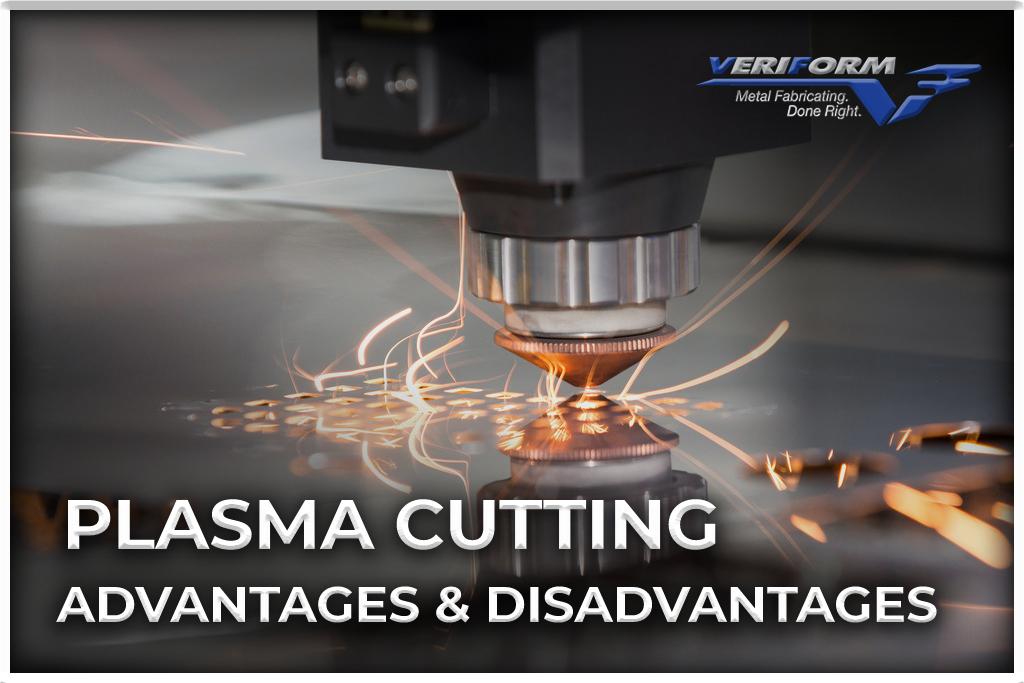
Now that we’ve established other common cutting methods, we can move on to plasma cutting. Plasma cutting can be described as the use of ionized gas to melt and remove material from the cut. However, it’s not as simple as that. So, how does it work? Plasma cutters function by sending a pressurized gas, like nitrogen, oxygen and argon through a small nozzle. The temperature of this gas is at least 20,000°C. In the center of this contraption, there is a negatively charged electrode. When power is applied and the channel touches the metal, that connection creates a circuit. A powerful spark is generated and that’s how it cuts metal.
The Advantages of Plasma Cutting
Versatility – Plasma cutting can be used to cut a variety of conductive material including steel, copper and iron. It can also cut different materials that have been stacked on top of one another which is a function that isn’t available for some of the other cutting methods.
Efficiency – If you compare the cutting speed of a plasma cutter to other cutting tools, the plasma cutter will definitely win. A plasma cutter is about 1/4 faster than any other cutting tool.
Cost Efficient – Since plasma can cut a lot faster without wasting as much material, that means the fabricator can get the job done quicker. This means more productivity along with less chances of injury bringing the cost for the end user down.
Safety – The gas used in plasma cutting is non-explosive or flammable making it the safer option compared to some of the other cutting processes.
The Disadvantages of Plasma Cutting
Limited – The cuts are more shallow because the depth is limited. That means it won’t cut thick or dense material as easily.
Fumes – This process does tend to generate excessive fumes. However, in a well-ventilated workshop, this shouldn’t be an issue for the fabricators.
Light exposure – When a plasma cutter is in action, it creates bright flashes which can affect the eyes unless you have the proper safety wear and guidance.
Plasma Cutting Services — Call VeriForm
Although plasma cutting does have its downside, the benefits definitely out weigh them. However, even though that’s the case, it does depend on the material you intend to work with. Your best bet is to contact a professional metal fabrication expert like VeriForm. VeriForm has many years of expertise when it comes to a variety of fabrication processes. Not only are they efficient, they get the job done right the first time. If you need professional consultation about your next metal fabrication project, contact VeriForm today.
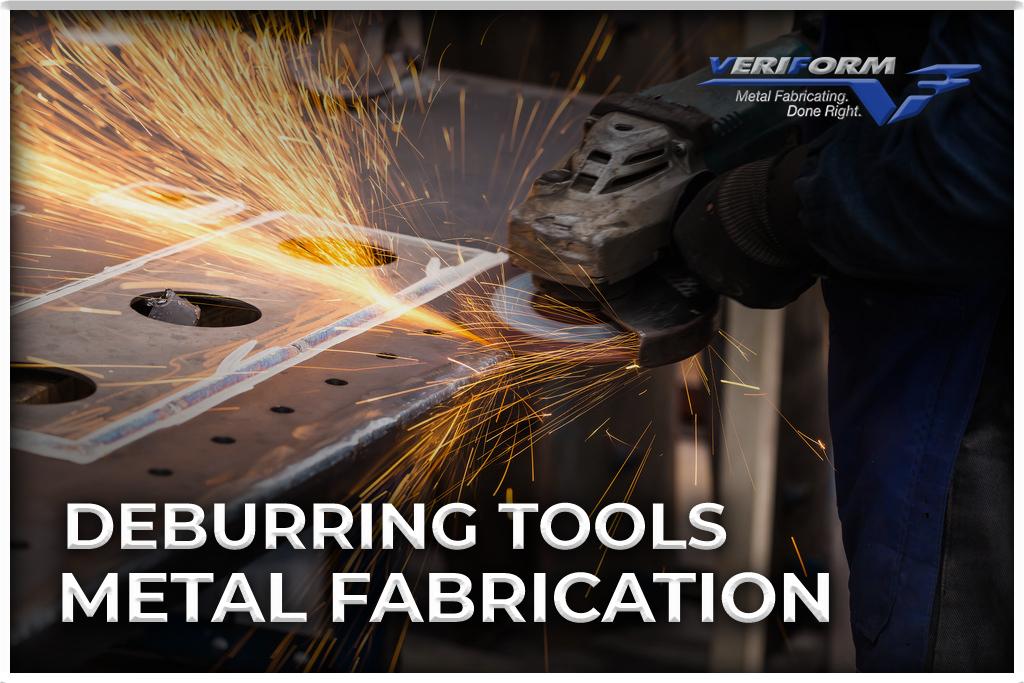
When metal goes through machining operations like grinding, milling, or drilling, it can leave surface imperfections called burrs. Unless they’re cleared away, they can cause problems like decreased fracture resistance, shorter fatigue life, and improper fastener seeing. Deburring is the process of cleaning up these small ridges and protrusions so that the final product functions as intended. While there are a variety of deburring tools available to deliver premium-quality, burr-free finishes, the three types mentioned in this article are the most popular for their ease of use and excellent results.
Manual Deburring Tools
According to Engineering 360, manual deburring tools are the most commonly used option. These hand-held devices consist of a tool and deburring blade. Depending on which brand you buy, you may be able to change the blades when they wear down or switch applications. They also have rotating blades that work constantly while deburring and a telescopic handle to support applications with a longer reach.
Advantage & Disadvantages
The biggest advantage to using manual deburring tools is that they’re cost-effective, flexible and easy to customize. You can check your work as you go along and improve as necessary. The biggest downside is that manual deburring takes longer, so it’s less suitable for high-volume work.
Mechanical Deburring Tools
With mechanical deburring tools, you grind off the burr or roll the edges onto itself and flatten it so it doesn’t protrude. Unlike manual deburring, which involves a hand tool, you use a specially designed machine to get the job done.
Advantages & Disadvantages
The advantage of this method is that it offers high-quality finishes in a fraction of the time it takes to deburr manually. This is why mechanical deburring tools are a fixture in most machining operations. Eliminating the need for hand sanding and grinding increases productivity and improves the finished results. On the other hand, mechanical deburring equipment takes up more space, and definitely more costly compared to manual deburring.
Electrochemical Deburring Tools
Many fabricators use electrochemical machining (ECM) for deburring when doing precision work or dealing with difficult materials and hard-to-reach spots. Electrochemical energy is conducted through the burrs using a salt or glycol solution, eliminating them without destroying the surrounding metal. The deburring equipment is a cathode that uses a DC current and the above-mentioned electrolyte fluid to create an anodic reaction that removes burrs quickly and precisely.
Advantages & Disadvantages
Electrochemical deburring yields an excellent surface finish and highly accurate results. The workpieces experience no thermal stresses and the process itself is efficient, which increases plant productivity. The main disadvantages are the skill required and the high initial cost of the equipment. However, the benefits outweigh these concerns.
Metal Deburring Specialists For Your Machining Needs
At VeriForm, we have decades of experience working with a wide range of metal fabricators. The team knows which deburring tools and technology are the best for a given application. Their expertise is one of the many reasons why we’ve become a trusted provider of fabrication services across Ontario. Other capabilities include welding, bending, rolling and more. To learn more about machining capabilities and how we can contribute to your success, contact VeriForm today or make a call at 519-653-6000.
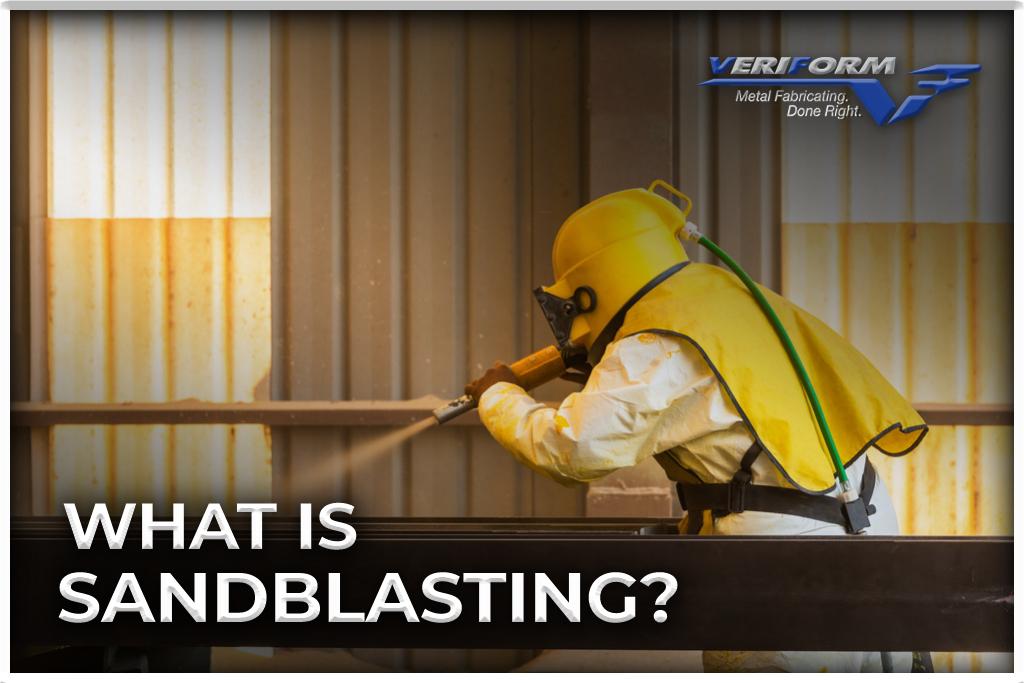
Sandblasting is an industrial process that is also referred to as abrasive blasting. The sandblasting process dates back to 1870 when Benjamin Chew Tilghman first took out a patent for this newly invented industrial finishing process. Tilghman had taken note of the effect on windows caused by wind-blown sand in the desert. This eventually gave him the idea to refine the process of sandblasting for various industrial applications. In 1877, Tilghman took out a second patent for sharpening industrial files uniquely marketed as “liquid grindstone”. Initially, he has found the process particularly well-suited for sharpening files, cleaning metal surfaces such as boilers, and finishing wooden grain surfaces. Since that time, the sandblasting service has been used worldwide for various industrial applications.
How Are Sandblasting Services Performed?
Sandblasting is performed by forcibly expelling a high-pressure stream of abrasive material called a media against a solid surface. The person conducting the sandblasting service must wear a variety of personal protective equipment (PPE) to protect their eyes, hands, and skin from these high-velocity particles. Typically, compressed air is used in the sandblasting process.
However, some sandblasting machines use a centrifugal wheel to project the media at the target surface. The equipment used for sandblasting includes a machine chamber where the media and compressed air are mixed. The air and particle mixture are then forced into a hose and out through a hand-held nozzle to direct the spray of particles at the work surface. Sandblasting equipment is made from tough and durable materials, such as boron carbide since it must resist the abrasive wear and tear of the process.
Sandblasting Variations
Variations of the sandblasting process may use different media, some of which are highly abrasive while others are less abrasive. For instance, sand or metal shots are used as the most abrasive media types, while less abrasive variants of the process might use glass beads, plastic stock (PMB), corncobs, or even walnut shells. Lastly, some blasting processes are barely abrasive, including soda blasting which uses baking soda and dry-ice blasting.
What Are The Benefits Of Sandblasting?
Like many other industrial processes, sandblasting can be used for various industrial applications. Sandblasting is often used to polish and smooth a rough surface, for starters. But you can also use it to rough up a smooth surface, which is usually done to prepare the surface for painting. Alternatively, sandblasting can be used to re-shape a surface, or you can use it to clean and remove particle contaminants from a surface.
Contact VeriForm Inc For Sandblasting Service
If you’re looking for metal fabrication services including sandblasting, don’t hesitate to consider VeriForm today. VeriForm has been in business for at least 25 years. They have great expertise and top-notch equipment to perform any metal fabrication capabilities. Contact VeriForm today to receive a quote on your next project. No matter how big or small, VeriForm will get the job done right the first time.